

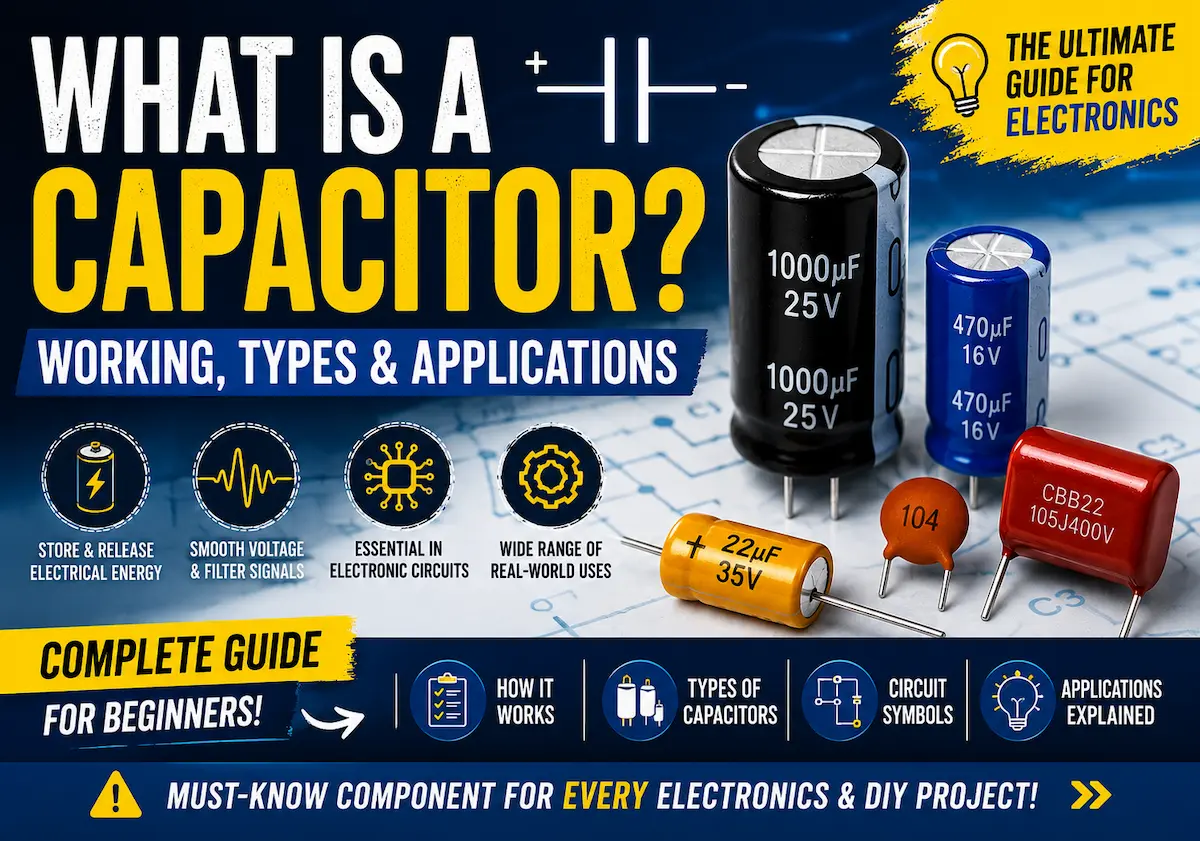
What is a Capacitor? Working, Types & Applications

If you’re diving into electronics or DIY projects, one component you’ll encounter everywhere is the capacitor. From powering circuits to filtering signals, capacitors are essential building blocks in modern electronics.
In this guide, you’ll learn what a capacitor is, how it works, its different types, and real-world applications—all explained in a beginner-friendly way.
What is a Capacitor?
A capacitor is an electronic component that stores electrical energy in the form of an electric field. It consists of two conductive plates separated by an insulating material called a dielectric.
- Store and release electrical energy
- Smooth voltage fluctuations
- Block or pass signals depending on frequency
Basic Structure of a Capacitor
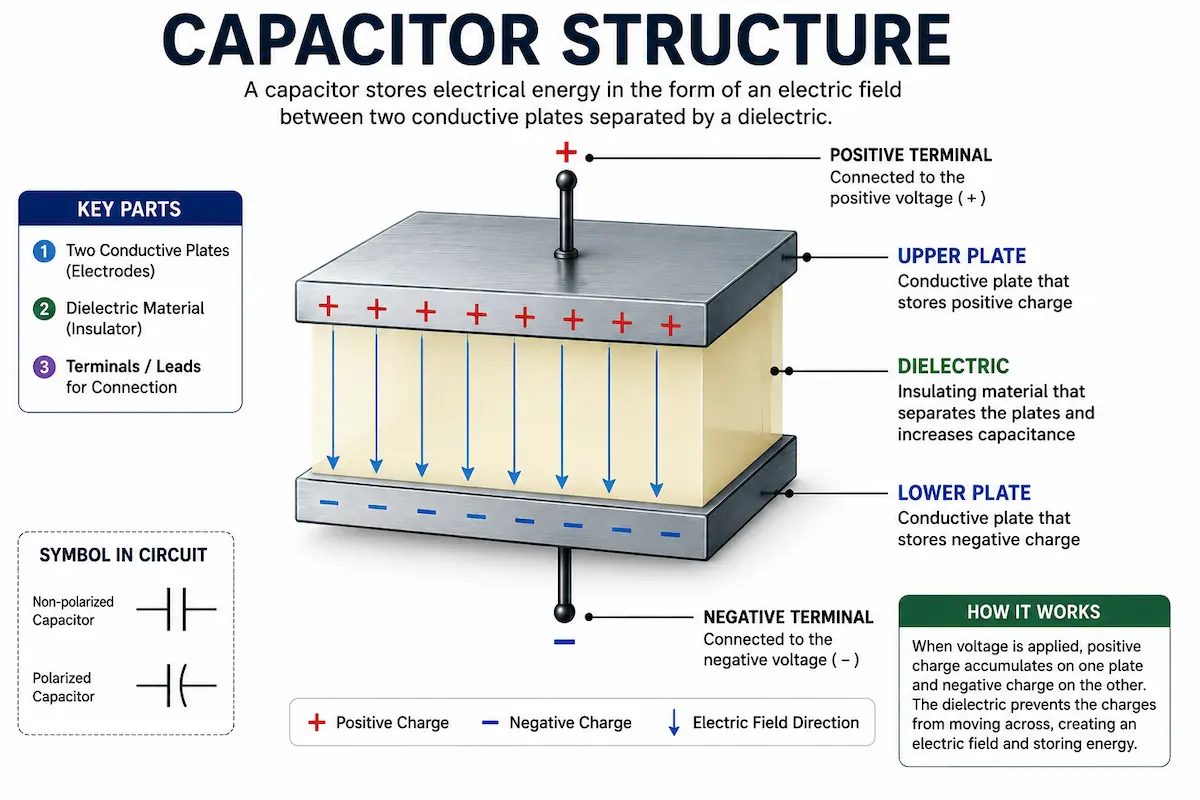
- Two metal plates (conductors)
- Dielectric material (insulator like air, ceramic, plastic)
When voltage is applied, electric charge accumulates on the plates, creating an electric field between them.
How Does a Capacitor Work?
1. Charging Phase
- Electrons accumulate on one plate
- Opposite charge builds on the other plate
- Energy is stored in the electric field
2. Discharging Phase
- Stored energy is released into the circuit
- Current flows until equilibrium is reached
Capacitance Explained
Capacitance is the ability of a capacitor to store charge.
- Measured in Farads (F)
- Common units:
- Microfarad (µF)
- Nanofarad (nF)
- Picofarad (pF)
Factors Affecting Capacitance:
- Plate area (larger = more storage)
- Distance between plates (smaller = more capacitance)
- Type of dielectric material
Types of Capacitors
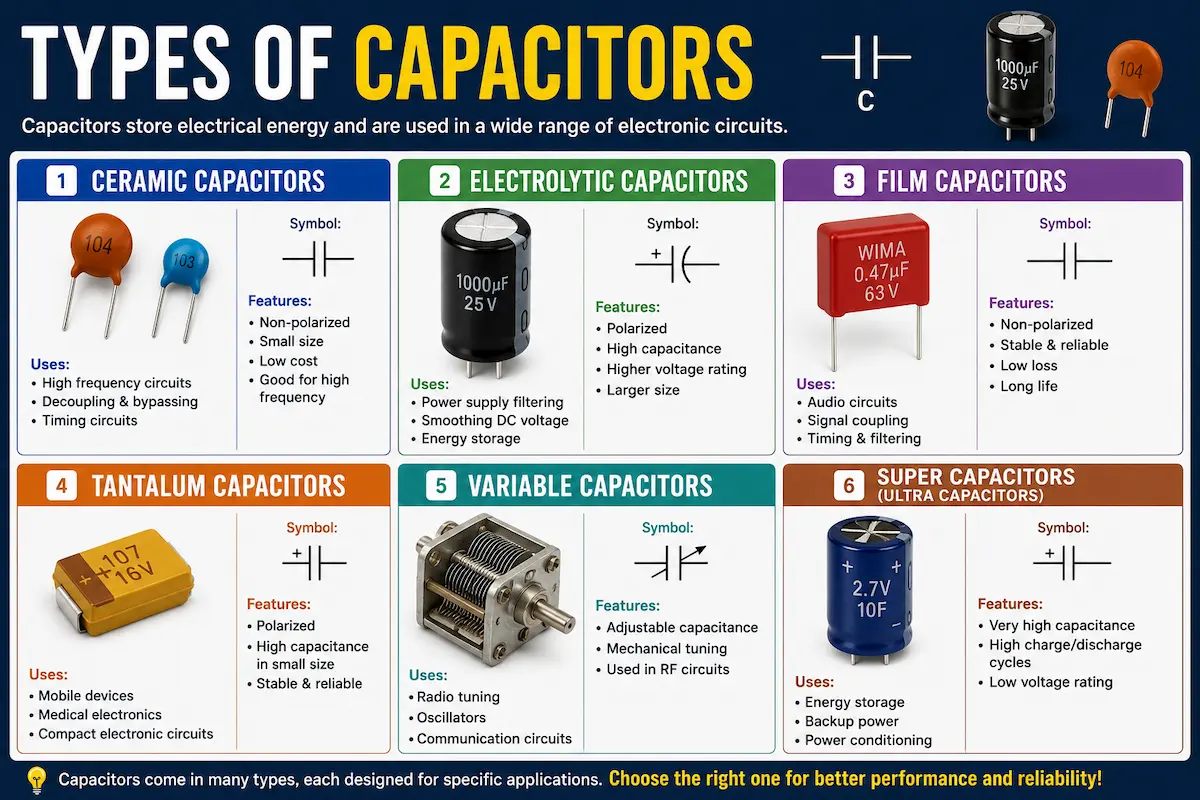
1. Ceramic Capacitors
- Small and inexpensive
- Used in high-frequency applications
- Common in Arduino and DIY circuits
2. Electrolytic Capacitors
- High capacitance values
- Polarized (must connect correctly)
- Used in power supplies
3. Film Capacitors
- Stable and reliable
- Used in audio and signal processing
4. Tantalum Capacitors
- Compact and precise
- Used in sensitive electronic circuits
5. Variable Capacitors
- Adjustable capacitance
- Used in tuning radios
Applications of Capacitors
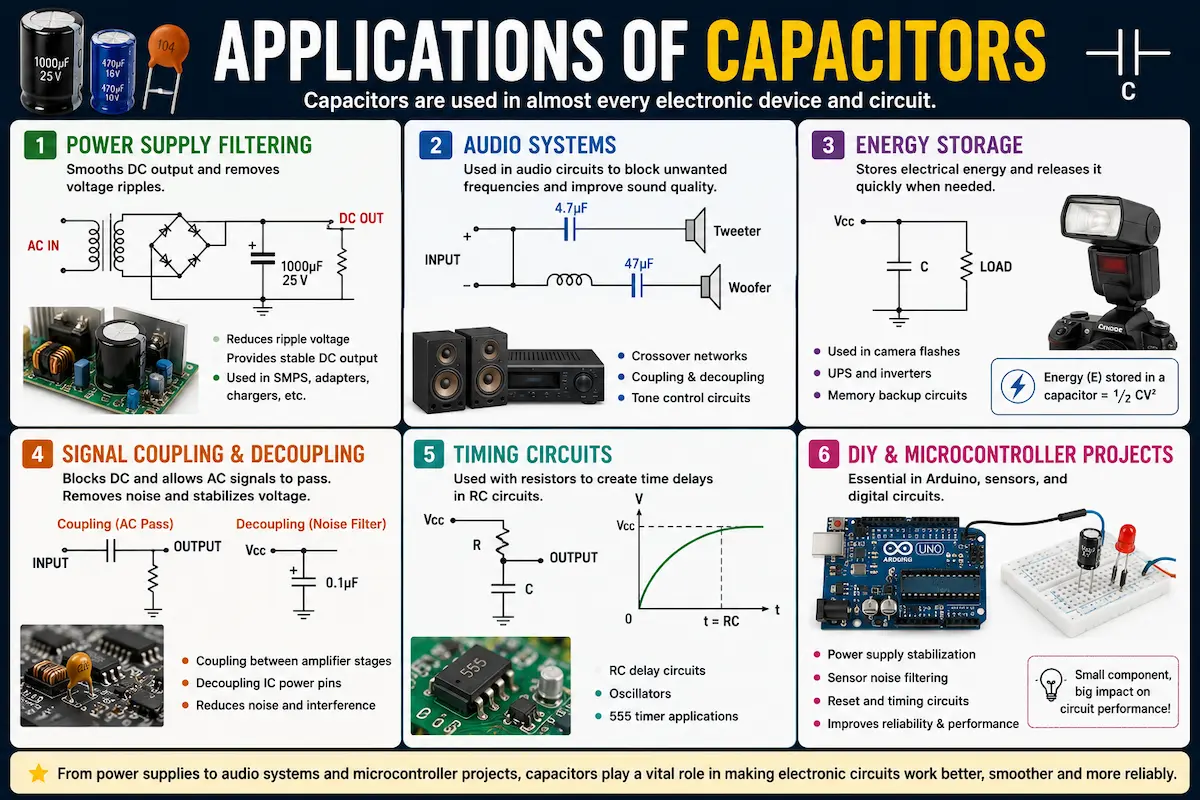
🔌 Power Supply Filtering
Smooths DC output and removes voltage ripples.
🎵 Audio Systems
Filters frequencies and improves sound quality.
⚡ Energy Storage
Stores energy for quick release (e.g., camera flash).
🔄 Signal Coupling & Decoupling
Blocks DC and allows AC signals to pass.
🏠 DIY & Arduino Projects
Used for noise reduction, timing circuits, and stabilization.
Capacitor Symbol in Circuits
- Non-polarized capacitor: Two equal lines
- Polarized capacitor: One curved line
Advantages of Capacitors
- Fast charging/discharging
- Long lifespan
- Low cost
- Improves circuit stability
Limitations
- Cannot store large energy like batteries
- Voltage limits must be respected
- Some types are polarity-sensitive
Conclusion
Capacitors are one of the most fundamental components in electronics. Whether you’re building an Arduino project, repairing a power supply, or designing circuits, understanding capacitors is crucial.
- They store and release energy
- They control voltage and signals
- They come in various types for different uses
Frequently Asked Questions (FAQs)
1. What does a capacitor do in a circuit?
It stores electrical energy and helps regulate voltage and signals.
2. Can a capacitor replace a battery?
No, because it stores much less energy and discharges quickly.
3. Why are capacitors used in power supplies?
To smooth out voltage and reduce ripple.


2 thoughts on “What is a Capacitor? Working, Types & Applications”