

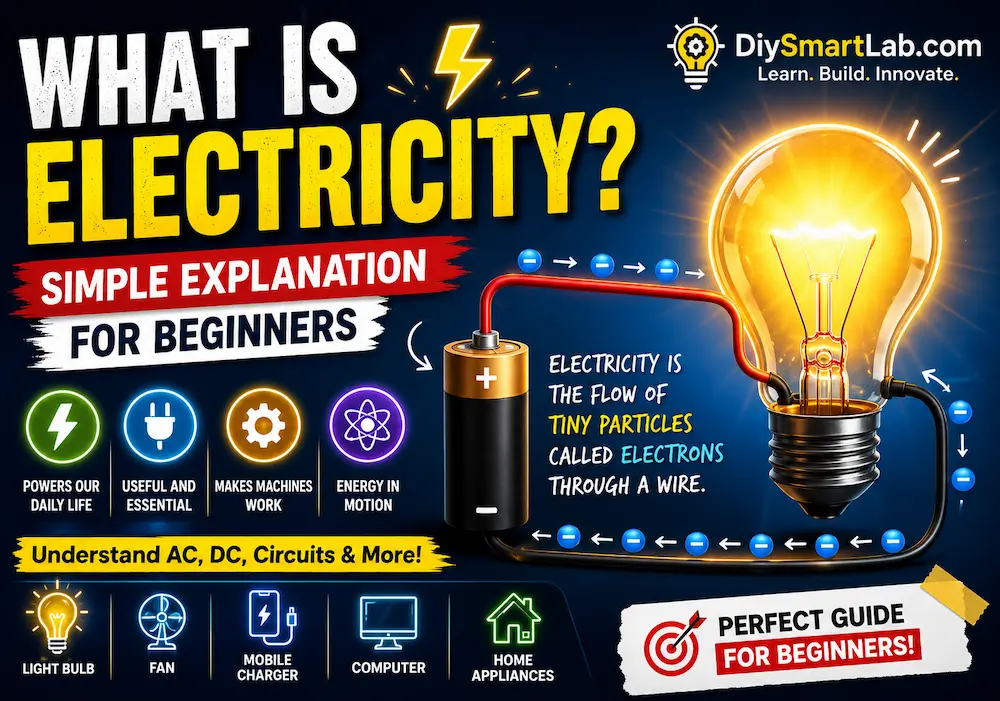

What is Electricity? Simple Explanation for Beginners
Electricity is one of the most important parts of modern life. From charging smartphones to powering home appliances, electricity is used everywhere. If you are starting your electronics journey, understanding the basics of electricity is the first step toward learning circuits, Arduino, sensors, and DIY electronics projects.
In this beginner-friendly guide by DiySmartLab.com, you will learn what electricity is, how it works, types of electricity, important electrical terms, and real-world applications in simple language.

What is Electricity?
Electricity is the movement or flow of tiny particles called electrons. These electrons move through wires and create electrical energy that powers electronic devices.
In simple words, electricity is a form of energy that allows devices like lights, fans, TVs, computers, and Arduino boards to work.
Simple Definition: Electricity is the flow of electric charge through a conductor.
How Does Electricity Work?
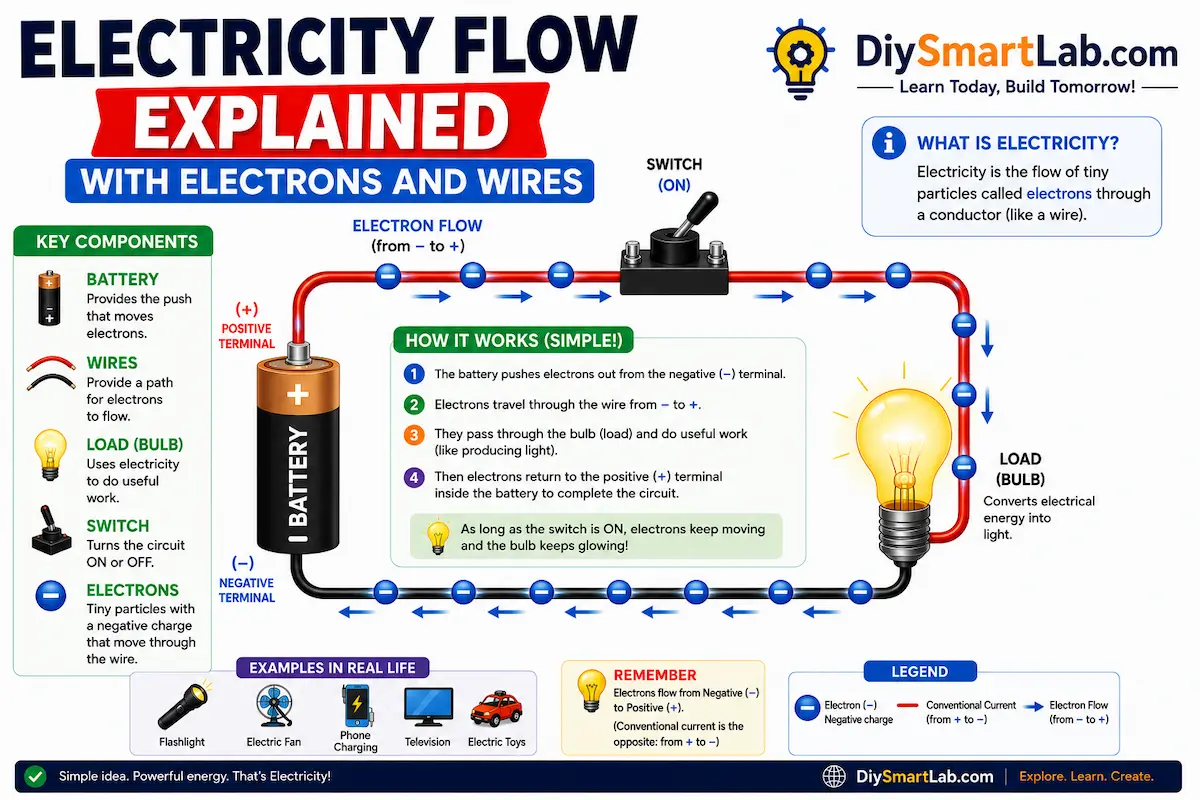
Inside every wire, there are billions of tiny electrons. When voltage is applied, these electrons start moving in one direction. This movement creates electric current.
You can compare electricity with water flowing through a pipe:
- Voltage = Water pressure
- Current = Water flow
- Wire = Water pipe
- Switch = Water valve
Main Parts of an Electrical Circuit
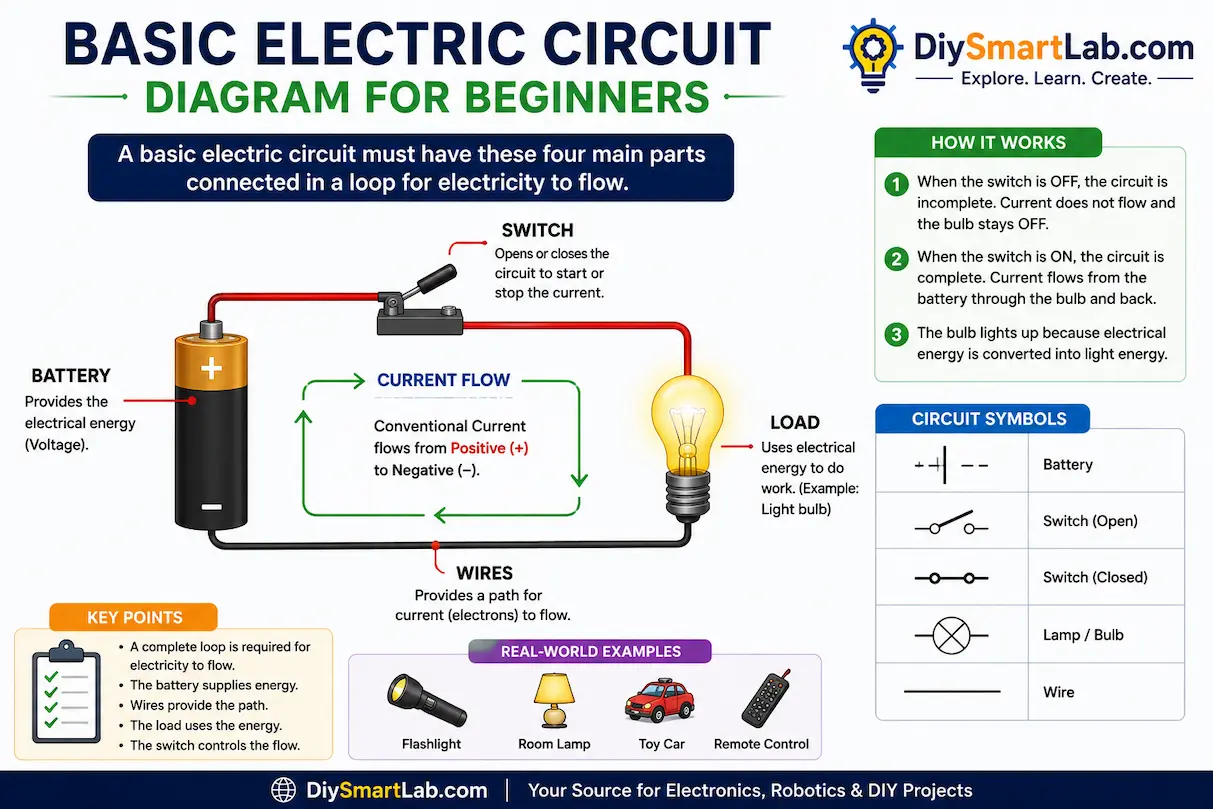
An electrical circuit needs several basic parts to work properly.
- Power Source: Battery or power supply
- Wires: Carry electricity
- Load: Device that uses electricity like LED or motor
- Switch: Controls current flow
Types of Electricity
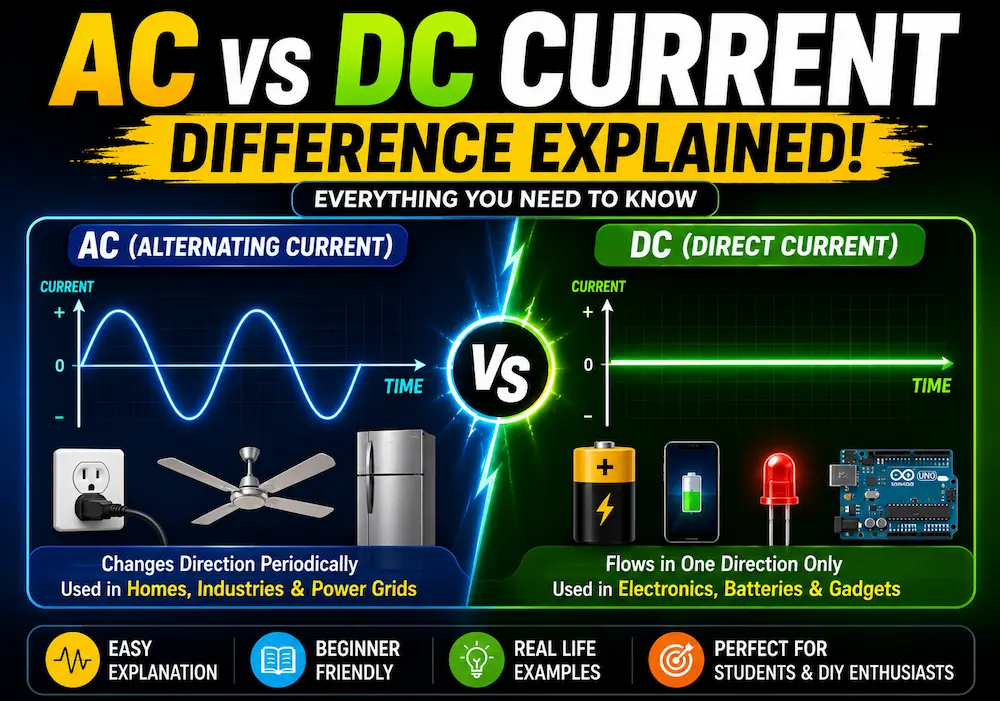
1. Direct Current (DC)
In DC electricity, current flows in only one direction. Batteries, power banks, and Arduino boards use DC power.
- Used in electronics circuits
- Safe for low-voltage projects
- Common in DIY electronics
2. Alternating Current (AC)
In AC electricity, current changes direction continuously. Home electricity supply uses AC power.
- Used in homes and industries
- Powers fans, TVs, refrigerators, and air conditioners
- Usually high voltage
Important Electrical Terms for Beginners
| Term | Meaning | Unit |
|---|---|---|
| Voltage | Electrical pressure | Volt (V) |
| Current | Flow of electrons | Ampere (A) |
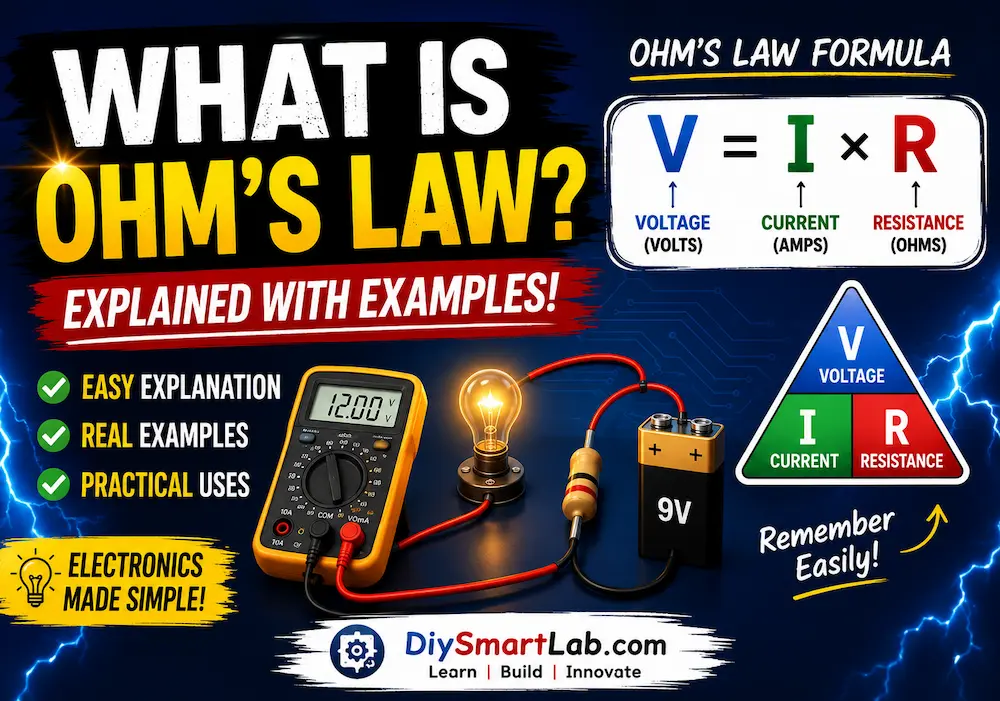
| Resistance | Opposition to current flow | Ohm (Ω) |
| Power | Amount of electrical energy used | Watt (W) |
What Conductors and Insulators Mean
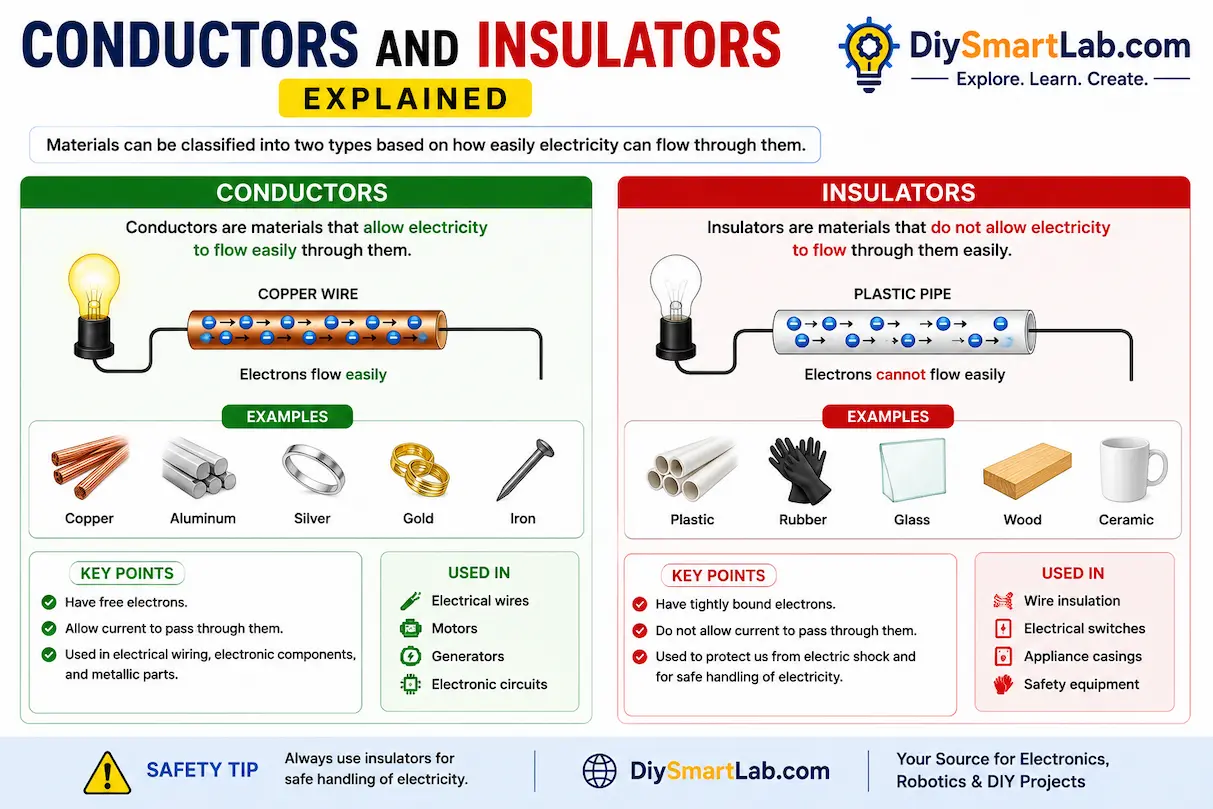
Some materials allow electricity to pass through easily, while others block electricity.
Conductors
- Copper
- Aluminum
- Silver
These materials are used in electrical wires because they allow current flow.
Insulators
- Plastic
- Rubber
- Glass
These materials prevent electric shock and protect users from electricity.
Real-Life Uses of Electricity
Electricity is used in almost every device around us.
- Lighting systems
- Mobile phone charging
- Computers and laptops
- Arduino and robotics projects
- Smart home automation
- Fans and motors
- Industrial machines
- Electric vehicles
Electrical Safety Tips for Beginners
- Never touch exposed wires
- Do not use damaged cables
- Always switch OFF power before wiring
- Keep water away from electrical devices
- Use low voltage for beginner DIY projects
- Wear proper safety equipment when needed
Why Learning Electricity is Important
Understanding electricity helps beginners build electronic circuits, Arduino projects, robotics systems, and smart home devices. It is the foundation of electronics engineering and DIY technology projects.
Once you understand electricity basics, learning components like resistors, capacitors, LEDs, relays, and sensors becomes much easier.
Conclusion
Electricity is the flow of electrons that powers electronic devices and systems. Learning the basics of electricity is essential for anyone interested in electronics, Arduino, robotics, or DIY projects.
We hope this beginner-friendly guide from DiySmartLab.com helped you understand electricity in a simple and practical way. Continue exploring electronics basics to build your knowledge step by step.
Frequently Asked Questions (FAQs)
What is electricity in simple words?
Electricity is the flow of electrons through a wire that provides power to electronic devices.
What are the two types of electricity?
The two main types are Direct Current (DC) and Alternating Current (AC).
Why is electricity important?
Electricity powers homes, electronics, industries, communication systems, and modern technology.
What is electric current?
Electric current is the movement of electrons through a conductor like a wire.
Is electricity dangerous?
Yes, high voltage electricity can be dangerous. Always follow proper electrical safety precautions.
4 thoughts on “What is Electricity? Simple Explanation for Beginners”