

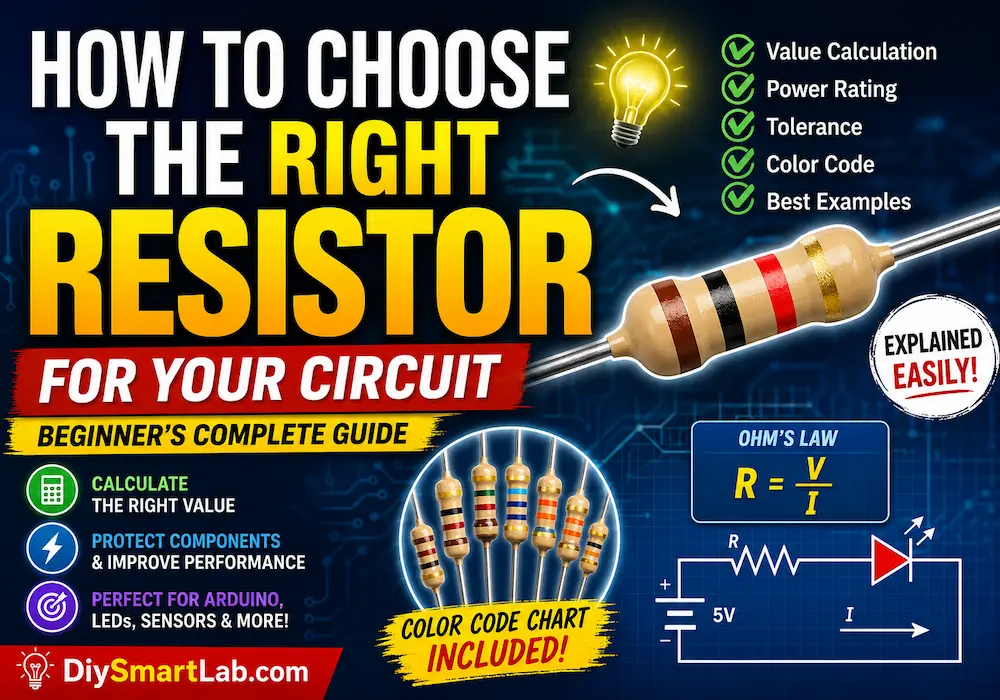

How to Choose the Right Resistor for Your Circuit
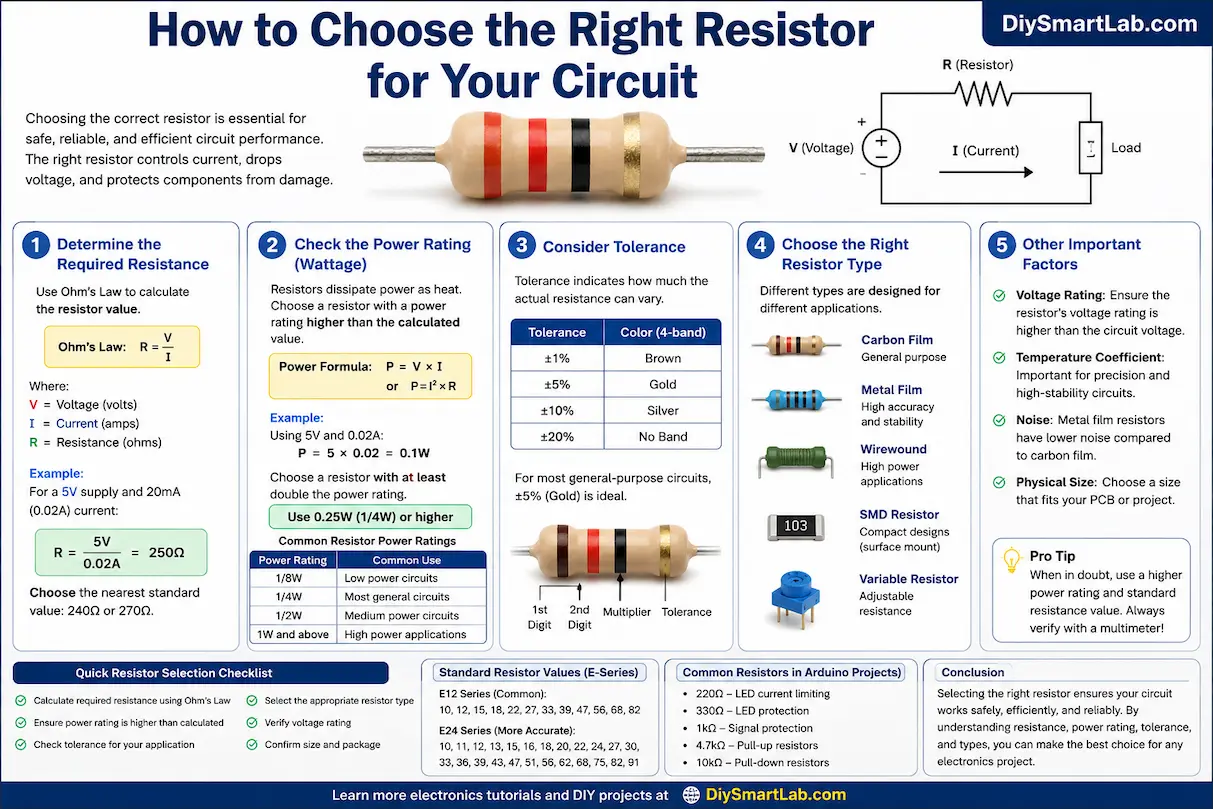
Choosing the correct resistor is one of the most important steps in designing any electronic circuit. Whether you are building an Arduino project, LED circuit, sensor module, or power supply, the right resistor helps control current, divide voltage, and protect sensitive components from damage.
In this beginner-friendly guide by DiySmartLab.com, you will learn how to choose the right resistor for your circuit, understand resistor values, calculate resistance using Ohm’s Law, select proper wattage, and avoid common mistakes.
What is a Resistor?
A resistor is a passive electronic component that limits or controls the flow of electric current in a circuit. It is one of the most commonly used components in electronics.
Resistors are used in:
- LED circuits
- Arduino projects
- Voltage dividers
- Sensor circuits
- Power supply circuits
- Amplifiers and filters
- Current limiting applications
Why Choosing the Correct Resistor is Important
Using the wrong resistor can cause several problems in your circuit:
- LEDs may burn out
- Components may overheat
- Sensors may give incorrect readings
- Arduino pins may get damaged
- Circuit may not work properly
- Excessive power consumption
That is why understanding resistor selection is very important for beginners and advanced makers alike.
Main Factors to Consider When Choosing a Resistor
There are several important factors you should check before selecting a resistor.
- Resistance value (Ohms)
- Power rating (Watts)
- Tolerance percentage
- Type of resistor
- Voltage rating
- Temperature stability
- Application requirements
1. Choosing the Correct Resistance Value
The resistance value determines how much current will flow in the circuit. Resistance is measured in Ohms (Ω).
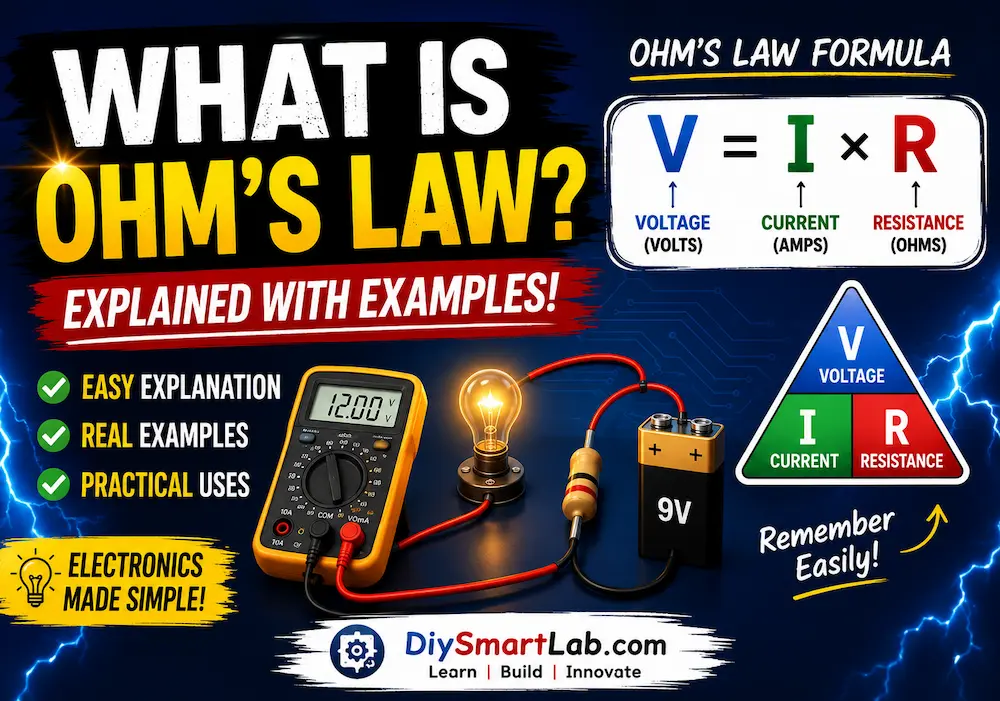
The most common way to calculate resistor value is by using Ohm’s Law.
Ohm’s Law Formula:
::contentReference[oaicite:0]{index=0}
Where:
- V = Voltage
- I = Current
- R = Resistance
You can rearrange the formula to calculate resistance:
::contentReference[oaicite:1]{index=1}
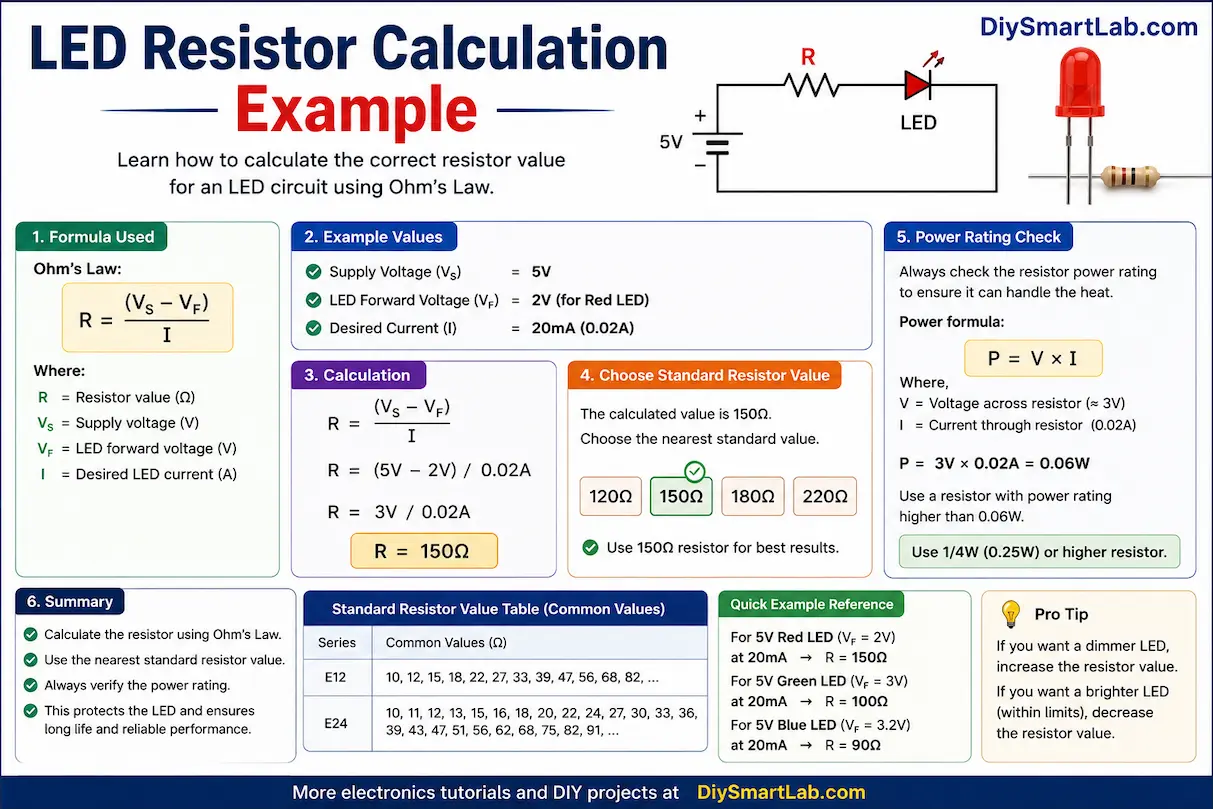
Example: Choosing a Resistor for an LED
Suppose you have:
- Power Supply = 5V
- LED Forward Voltage = 2V
- Desired Current = 20mA (0.02A)
Required resistor value:
:contentReference[oaicite:2]{index=2}
So, a 150Ω resistor is suitable for this LED circuit.
2. Choosing the Correct Power Rating
Every resistor converts electrical energy into heat. If the resistor cannot handle the heat, it may burn.
Power is measured in Watts (W).
Use the power formula:
:contentReference[oaicite:3]{index=3}
Or:
:contentReference[oaicite:4]{index=4}
Common resistor power ratings:
| Power Rating | Common Use |
|---|---|
| 1/8 Watt | Small low-power circuits |
| 1/4 Watt | Most Arduino and DIY projects |
| 1/2 Watt | Medium power applications |
| 1 Watt+ | Power circuits and motor control |
Always choose a resistor with a power rating higher than the calculated value for safety.
3. Understanding Resistor Tolerance
Tolerance shows how accurate the resistor value is.
For example, a 100Ω resistor with ±5% tolerance can actually measure between 95Ω and 105Ω.
Common tolerance values:
- ±1% – Precision circuits
- ±5% – General electronics
- ±10% – Basic applications
4. Types of Resistors
Different resistor types are designed for different applications.
| Resistor Type | Applications |
|---|---|
| Carbon Film | General electronics |
| Metal Film | Precision circuits |
| Wirewound | High power circuits |
| Variable Resistor | Adjustable circuits |
| SMD Resistor | Compact PCB designs |
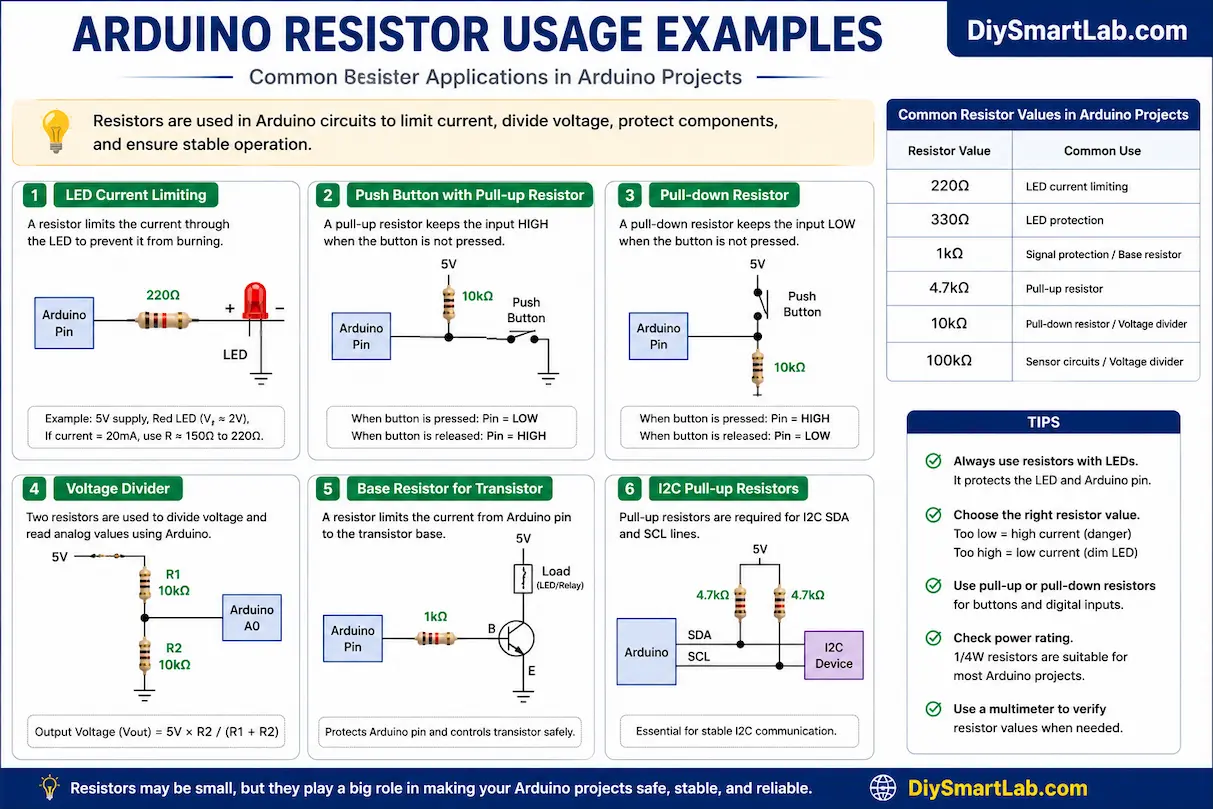
5. Choosing Resistors for Arduino Projects
In Arduino circuits, resistors are commonly used with LEDs, push buttons, sensors, and communication modules.
Common resistor values used in Arduino:
- 220Ω – LED current limiting
- 330Ω – LED protection
- 1kΩ – Signal protection
- 4.7kΩ – Pull-up resistor
- 10kΩ – Pull-down resistor
Common Mistakes Beginners Make
- Using no resistor with LEDs
- Ignoring resistor wattage
- Using incorrect resistor values
- Confusing color bands
- Using low tolerance resistors in precision circuits
- Not checking resistor heating
Quick Tips for Choosing the Right Resistor
- Always calculate current before selecting a resistor
- Use Ohm’s Law for accurate calculations
- Choose slightly higher power ratings for safety
- Use metal film resistors for precision projects
- Keep common resistor values in your electronics kit
- Use a multimeter to verify resistor values
Frequently Asked Questions (FAQs)
What resistor should I use for a 5V LED circuit?
For most standard LEDs with a 5V supply, a resistor between 220Ω and 330Ω is commonly used.
What happens if resistor value is too low?
Too much current may flow through the circuit, which can damage LEDs, sensors, or microcontrollers.
Can I use a higher watt resistor?
Yes. Using a resistor with a higher wattage rating is generally safe and improves heat handling.
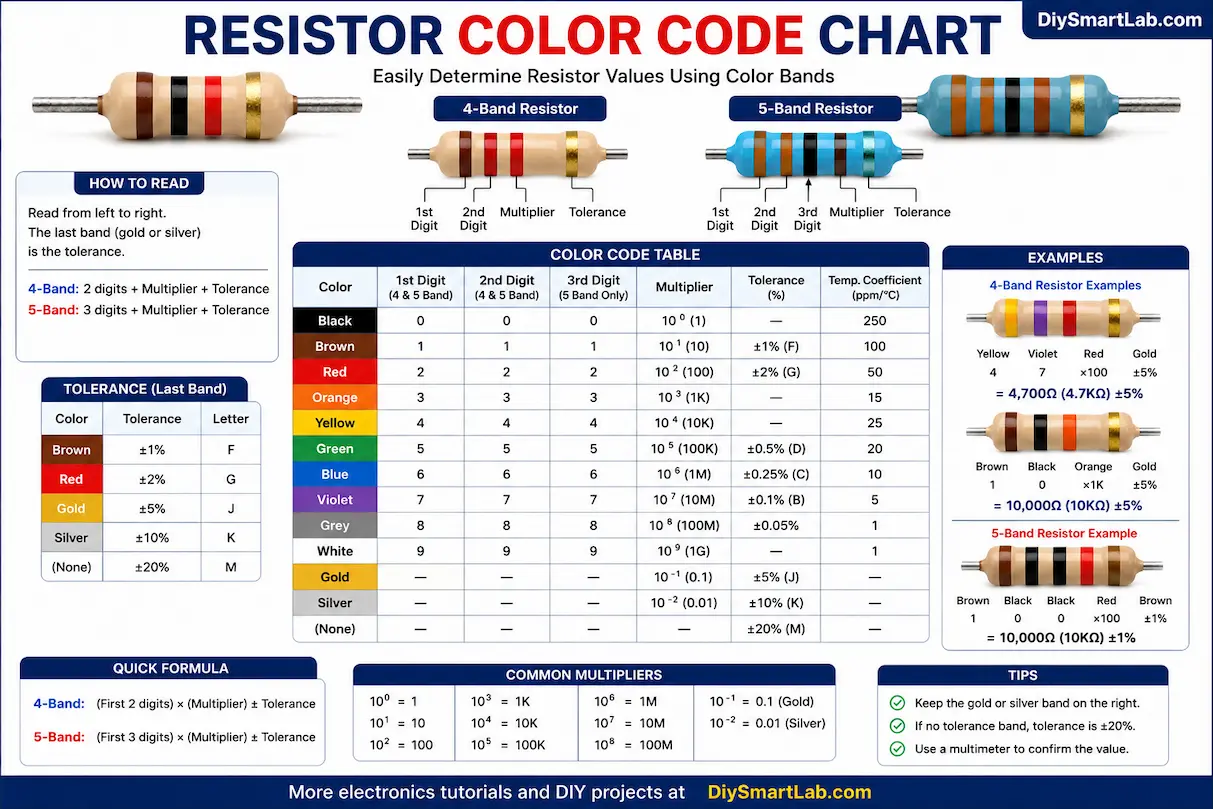
How do I identify resistor values?
You can identify resistor values using color bands or by measuring with a digital multimeter.
Final Thoughts
Learning how to choose the right resistor is an essential electronics skill for every beginner. Once you understand resistance value, power rating, tolerance, and resistor types, you can confidently build safer and more reliable circuits.
Whether you are working on Arduino projects, LED circuits, sensor modules, or DIY electronics, selecting the proper resistor helps your project perform efficiently and safely.
Keep following DiySmartLab.com for more beginner-friendly electronics tutorials, Arduino guides, and smart DIY project ideas.











One thought on “How to Choose the Right Resistor for Your Circuit ?”