

How to Use a Relay Safely in Home Automation Projects
Relays are one of the most important components used in DIY home automation projects. Whether you want to control lights, fans, water pumps, or home appliances using Arduino, ESP32, or Raspberry Pi, a relay allows you to switch high-voltage AC devices safely using low-voltage control signals.
However, working with relays and AC electricity can be dangerous if proper safety measures are not followed. In this guide, you will learn how to use a relay safely in home automation projects, common mistakes to avoid, wiring methods, and important safety tips for beginners.

What is a Relay?
A relay is an electrically operated switch that allows a low-voltage circuit to control a high-voltage device. It provides isolation between the microcontroller and dangerous AC mains voltage.
For example, an Arduino operates at 5V, but household appliances work on 220V or 110V AC. A relay safely bridges this gap.
- Controls high-power devices
- Provides electrical isolation
- Works with Arduino, ESP8266, ESP32, and Raspberry Pi
- Commonly used in smart home projects
How Does a Relay Work?
A relay contains an electromagnetic coil and internal switch contacts. When the coil receives voltage, it creates a magnetic field that changes the switch position.
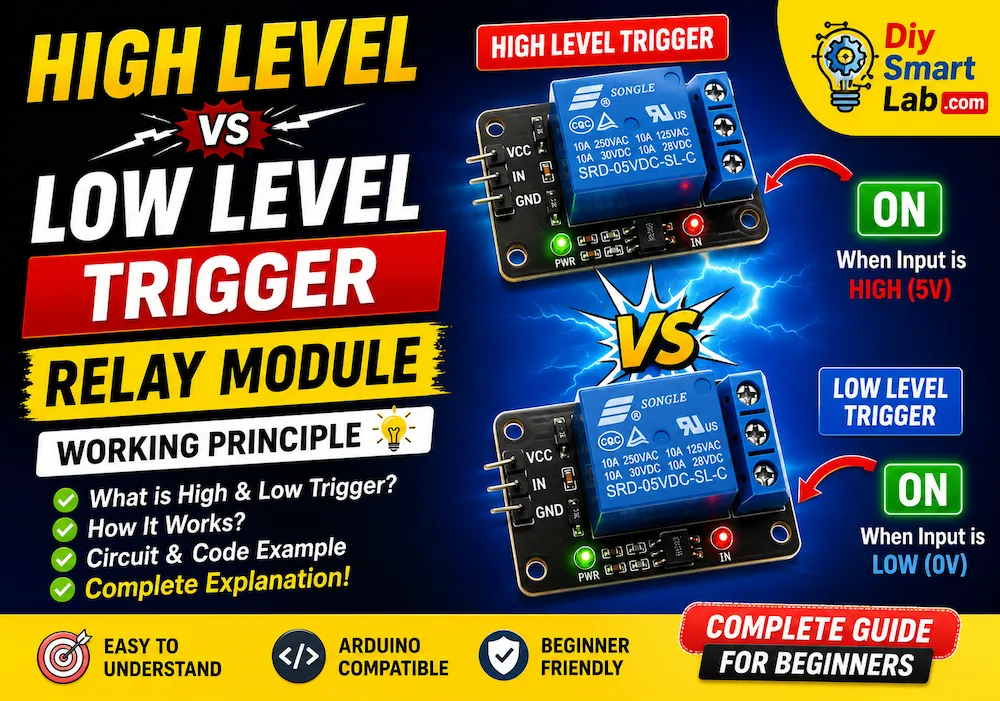
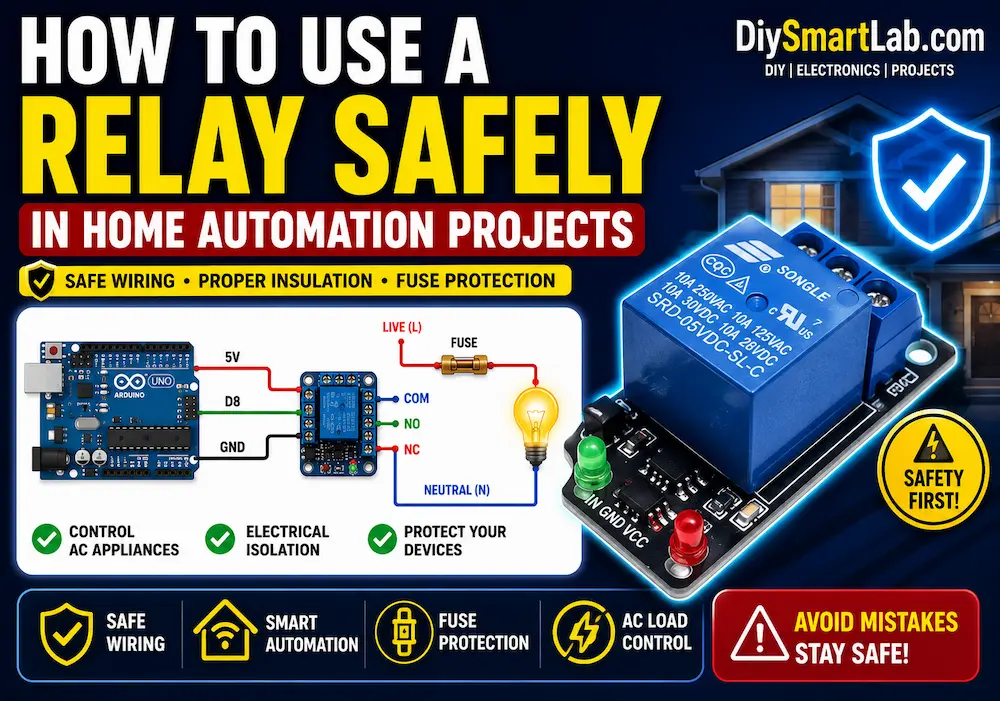
- COM (Common): Main switching terminal
- NO (Normally Open): Connected only when relay is ON
- NC (Normally Closed): Connected when relay is OFF

Why Relay Safety is Important
Relays are often connected to dangerous AC mains voltage. Incorrect wiring or poor insulation can lead to:
- Electric shock
- Short circuits
- Fire hazards
- Damage to microcontrollers
- Appliance failure
That is why every DIY enthusiast should understand proper relay safety practices before building home automation systems.
Essential Safety Tips for Using Relays
1. Use Opto-Isolated Relay Modules
Always prefer opto-isolated relay modules because they provide extra protection between the control circuit and AC voltage.
These modules reduce the risk of high voltage damaging your Arduino or ESP board.
2. Check Relay Voltage and Current Ratings
Never exceed the relay’s voltage or current capacity.
| Relay Rating | Suitable Devices |
|---|---|
| 5A 250V AC | Small lamps and fans |
| 10A 250V AC | Home appliances |
| 30A Relay | Heavy loads and motors |
If your appliance draws more current than the relay can handle, the contacts may overheat and fail.
3. Never Touch Live AC Wires
Before wiring or modifying your project:
- Turn OFF the mains power
- Disconnect the power source
- Use insulated tools
- Wear safety gloves if needed
AC electricity can cause serious injury or death.
4. Use Proper Insulation
All exposed AC terminals should be properly insulated.
- Use heat shrink tubing
- Use electrical tape
- Mount circuits inside plastic enclosures
- Avoid loose wires

5. Use Fuses for Protection
A fuse protects your appliances and wiring from excessive current.
Install a suitable fuse in series with the AC line to reduce fire risks.
6. Keep Low Voltage and High Voltage Separate
Never mix low-voltage wires and AC mains wires together.
- Separate wiring paths
- Maintain safe spacing
- Use dedicated terminal blocks
- Avoid crossing AC and signal wires
7. Use Quality Relay Modules
Cheap relay boards may lack proper isolation, protection circuits, or PCB spacing.
Always buy relay modules from trusted brands or reliable electronics suppliers.
Basic Relay Wiring for Home Automation
In a basic smart home setup:
- Arduino sends signal to relay module
- Relay switches AC appliance ON/OFF
- Appliance receives mains power through relay contacts

Common Relay Mistakes Beginners Make
- Connecting live wire incorrectly
- Using undersized wires
- Touching live terminals
- Overloading relay contacts
- Using relay without enclosure
- Ignoring fuse protection
- Using fake relay modules
Best Applications of Relays in Home Automation
- Smart lighting systems
- WiFi-controlled switches
- Voice-controlled appliances
- Automatic water pump control
- Home security systems
- Smart fan automation
- IoT-based appliance control
Relay vs Solid State Relay (SSR)
| Feature | Mechanical Relay | Solid State Relay |
|---|---|---|
| Moving Parts | Yes | No |
| Noise | Clicking sound | Silent |
| Speed | Slower | Faster |
| Life Span | Limited | Longer |
| Cost | Cheaper | More expensive |
Important Safety Warning
Never work directly with AC mains voltage unless you fully understand electrical safety procedures. If you are unsure, consult a qualified electrician.
Final Thoughts
Relays are extremely useful in DIY home automation projects because they allow low-voltage microcontrollers to safely control high-voltage appliances. However, safety should always be your top priority when working with AC electricity.
By using proper relay modules, insulation, fuse protection, safe wiring methods, and quality components, you can build reliable and secure smart home systems.
If you are a beginner, start with low-power projects first and always test your circuits carefully before connecting real household appliances.
Frequently Asked Questions (FAQs)
Can Arduino control home appliances using a relay?
Yes, Arduino can safely control AC appliances using a properly rated relay module.
Is it safe to use relay modules with 220V AC?
Yes, but only when proper insulation, fuse protection, and safe wiring practices are followed.
Why is relay isolation important?
Isolation protects the low-voltage microcontroller from dangerous high-voltage AC mains.
What is the difference between NO and NC in a relay?
NO means Normally Open and NC means Normally Closed. These define how the contacts behave when the relay is OFF.
Should I use a fuse with relay circuits?
Yes, using a fuse is highly recommended for electrical safety and overload protection.