

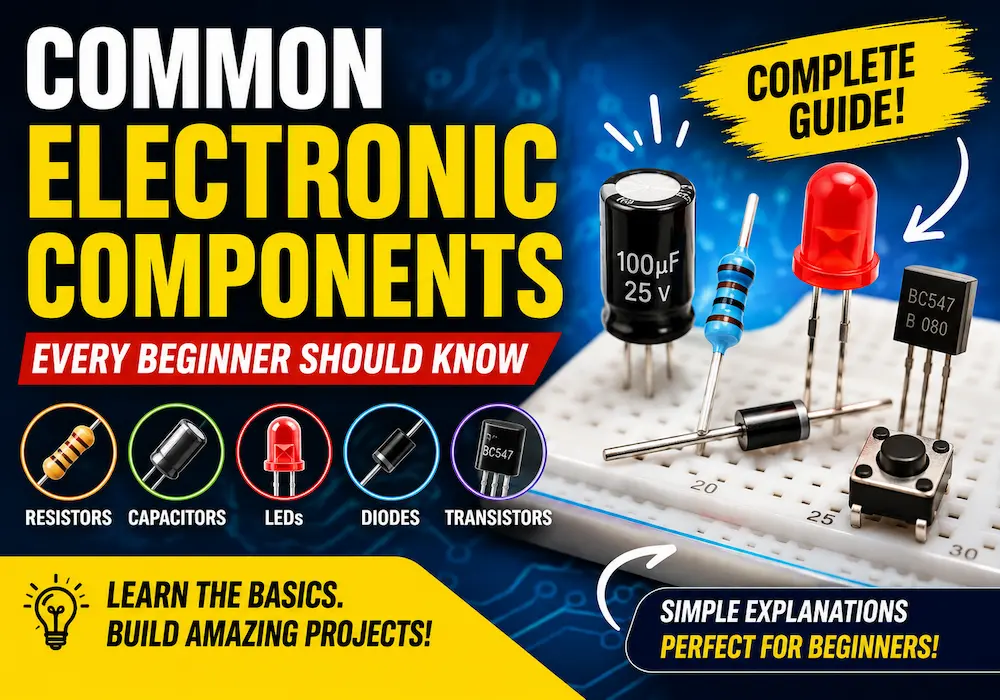
Common Electronic Components Every Beginner Should Know

Common Electronic Components Every Beginner Should Know
If you are starting your journey in electronics, understanding the most common electronic components is the first step toward building successful DIY projects. Whether you want to work with Arduino boards, sensors, robots, or smart home devices, knowing how basic components work will make circuit building much easier.
In this beginner-friendly guide from DiySmartLab.com, you will learn about the most important electronic components, their functions, and where they are commonly used.

Why Beginners Should Learn Electronic Components
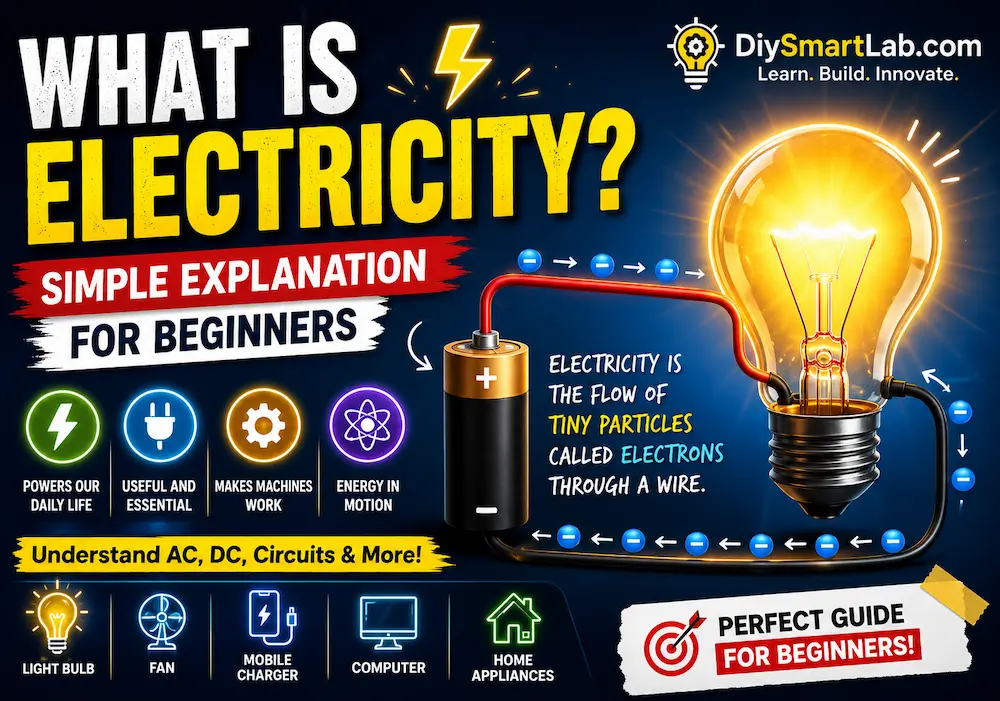
Electronic components are the building blocks of every electronic circuit. From simple LED blinkers to advanced automation systems, every project depends on components working together.
- Understand circuit diagrams easily
- Troubleshoot electronic projects faster
- Build Arduino and IoT projects confidently
- Improve practical electronics skills
- Choose the correct components for projects
1. Resistor
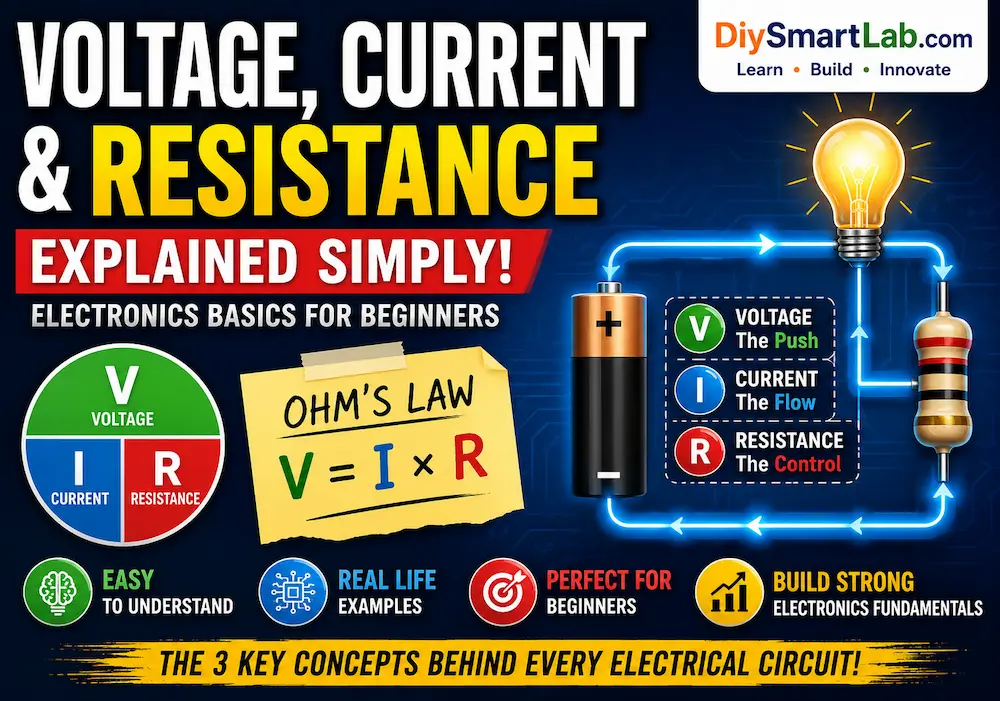
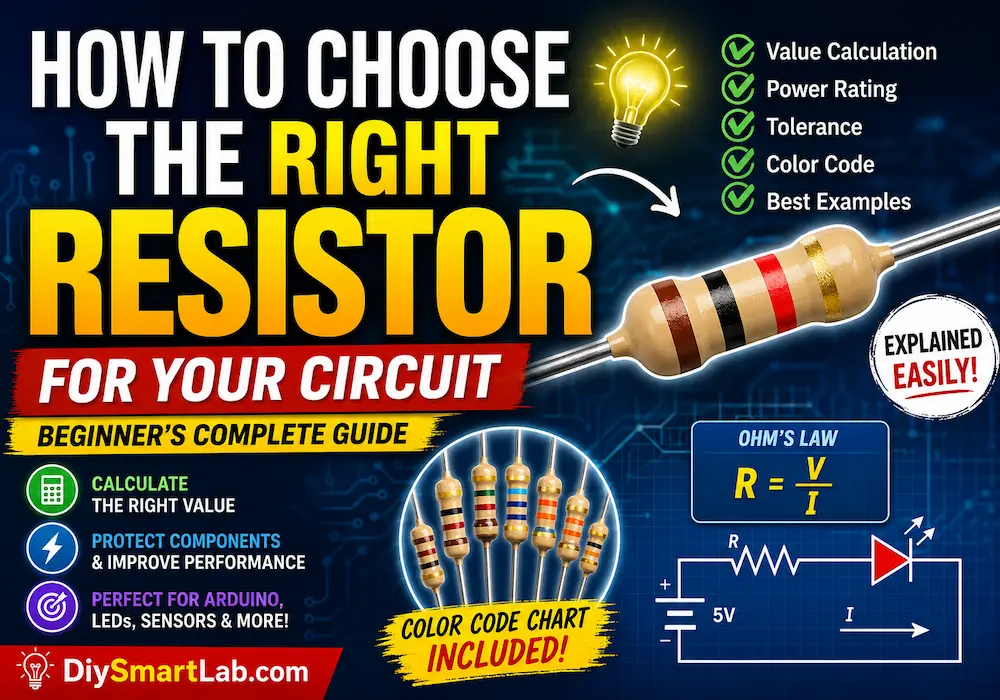
A resistor is one of the most commonly used electronic components. Its main job is to limit or control the flow of electric current in a circuit.

Common Uses of Resistors:
- Limiting current for LEDs
- Voltage division circuits
- Pull-up and pull-down circuits
- Protecting sensitive components
Beginner Tip: Resistor values are identified using color bands.
2. Capacitor
A capacitor stores electrical energy temporarily and releases it when needed. Capacitors are widely used in filtering, timing, and power supply circuits.

Common Uses of Capacitors:
- Smoothing power supply output
- Noise filtering
- Timing circuits
- Energy storage
Electrolytic capacitors are polarized, so beginners must connect them correctly.
3. LED (Light Emitting Diode)
An LED is a semiconductor device that emits light when current flows through it. LEDs are commonly used in indicators, displays, and lighting projects.

Important LED Facts:
- Long leg = Positive terminal
- Short leg = Negative terminal
- Requires a resistor for protection
4. Diode
A diode allows electric current to flow in only one direction. It is mainly used for rectification and circuit protection.

Applications of Diodes:
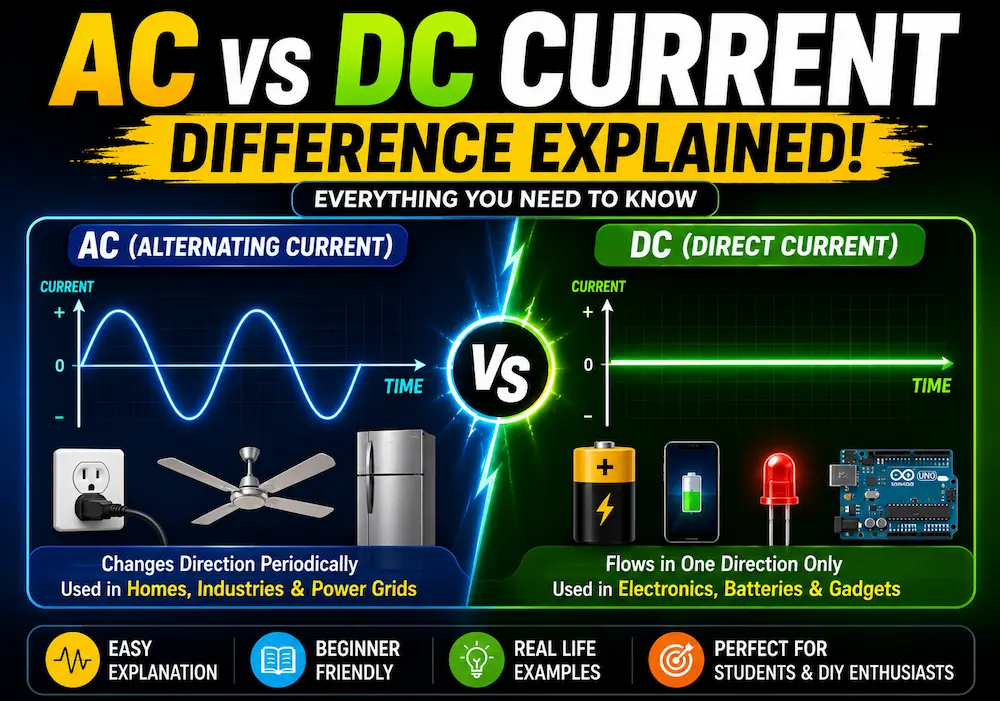
- AC to DC conversion
- Reverse polarity protection
- Signal demodulation
- Voltage regulation
5. Transistor
A transistor works as both a switch and an amplifier. It is one of the most important components in modern electronics.

Common Uses:
- Switching circuits
- Motor control
- Signal amplification
- Arduino output control
NPN and PNP are the two main types of transistors beginners should learn first.
6. Relay Module
A relay module allows low-voltage devices like Arduino boards to control high-voltage appliances safely.

Relay Applications:
- Home automation systems
- Smart switches
- Motor control circuits
- High-power device switching
7. Breadboard
A breadboard is used for building temporary circuits without soldering. It is extremely useful for beginners testing new projects.

Advantages of Breadboards:
- No soldering required
- Easy component testing
- Reusable for multiple projects
- Perfect for Arduino beginners
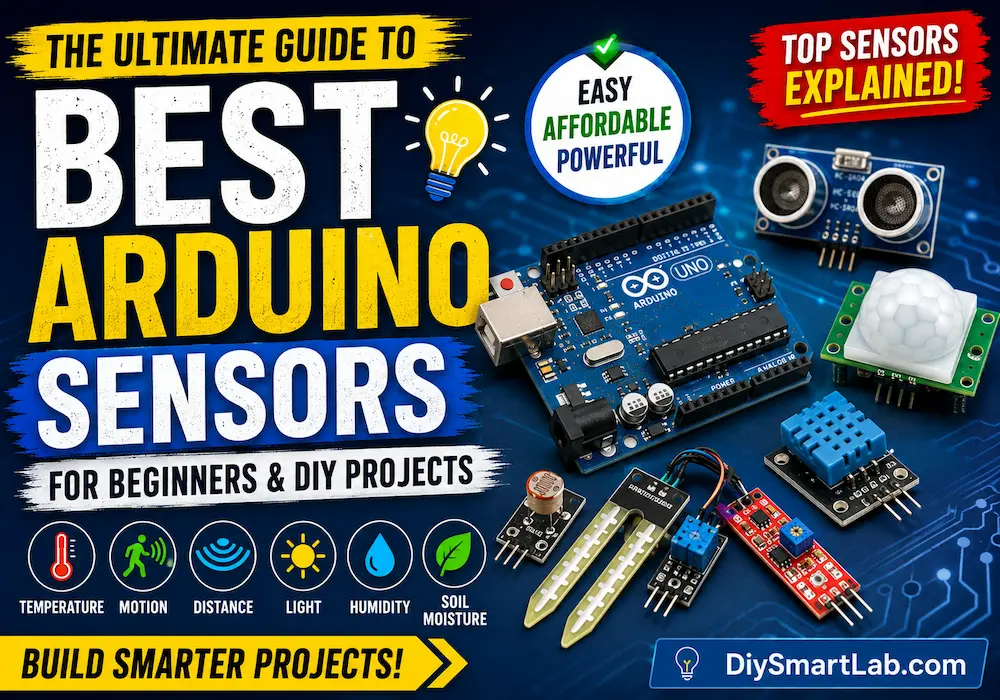
8. Sensors
Sensors detect changes in the environment and convert them into electrical signals. They are heavily used in automation and IoT projects.

Popular Beginner Sensors:
- PIR Motion Sensor
- Ultrasonic Sensor
- IR Sensor
- Temperature Sensor
- LDR Light Sensor
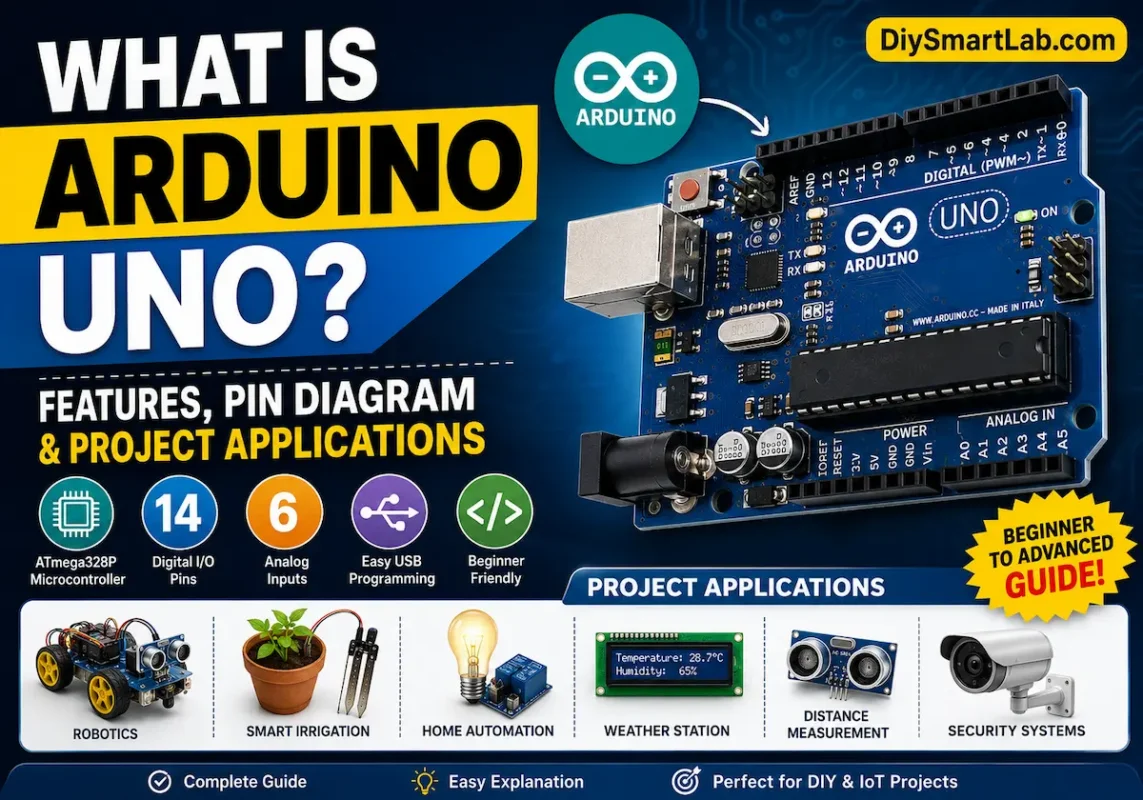
9. Arduino Uno
The Arduino Uno is one of the best microcontroller boards for beginners. It helps users build programmable electronic projects easily.

Arduino Projects Include:
- Smart home automation
- Robotics
- Weather stations
- Security systems
- DIY electronic gadgets
Basic Electronic Components Comparison Table
| Component | Main Function | Common Use |
|---|---|---|
| Resistor | Limits current | LED protection |
| Capacitor | Stores energy | Power filtering |
| LED | Produces light | Indicators |
| Diode | One-way current flow | Rectification |
| Transistor | Switching & amplification | Motor control |
| Relay | Controls high voltage | Home automation |
| Breadboard | Temporary connections | Circuit testing |
| Sensor | Detects environment | Automation projects |
| Arduino Uno | Microcontroller board | DIY programming projects |
Tips for Beginners in Electronics
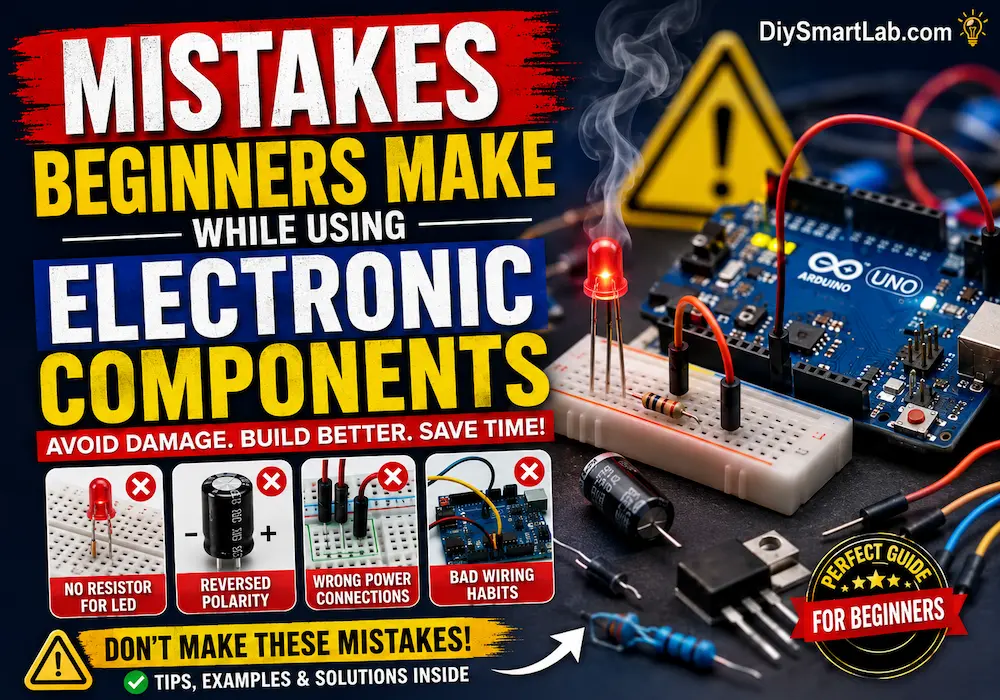
- Always double-check component polarity
- Use resistors with LEDs
- Start with low-voltage projects
- Practice using a breadboard
- Learn basic circuit diagrams
- Keep components organized properly
Conclusion
Learning about common electronic components is essential for anyone starting with DIY electronics. Components like resistors, capacitors, LEDs, transistors, sensors, and Arduino boards are the foundation of countless projects.
Once you understand these basics, building electronics projects becomes much easier and more enjoyable. Continue practicing with simple circuits, and gradually move toward advanced Arduino and automation projects.
Frequently Asked Questions (FAQs)
Which electronic component should beginners learn first?
Beginners should first learn about resistors, LEDs, capacitors, and breadboards because these are used in almost every electronic circuit.
Why are resistors important in circuits?
Resistors help control current flow and protect sensitive components like LEDs and microcontrollers.
What is the easiest microcontroller for beginners?
The Arduino Uno is one of the easiest and most beginner-friendly microcontroller boards available today.
Can I learn electronics without soldering?
Yes, beginners can use breadboards to build and test circuits without soldering.
You May Also Like
- What is a Resistor? Types, Uses & Color Code Explained
- What is a Capacitor? Working, Types & Applications Explained
- What is a Diode? Working Principle with Examples
- What is an LED? How It Works and How to Use It
- What is Arduino Uno? Features and Pin Diagram
- What is a Breadboard? How to Use It Properly
One thought on “Common Electronic Components Every Beginner Should Know”