
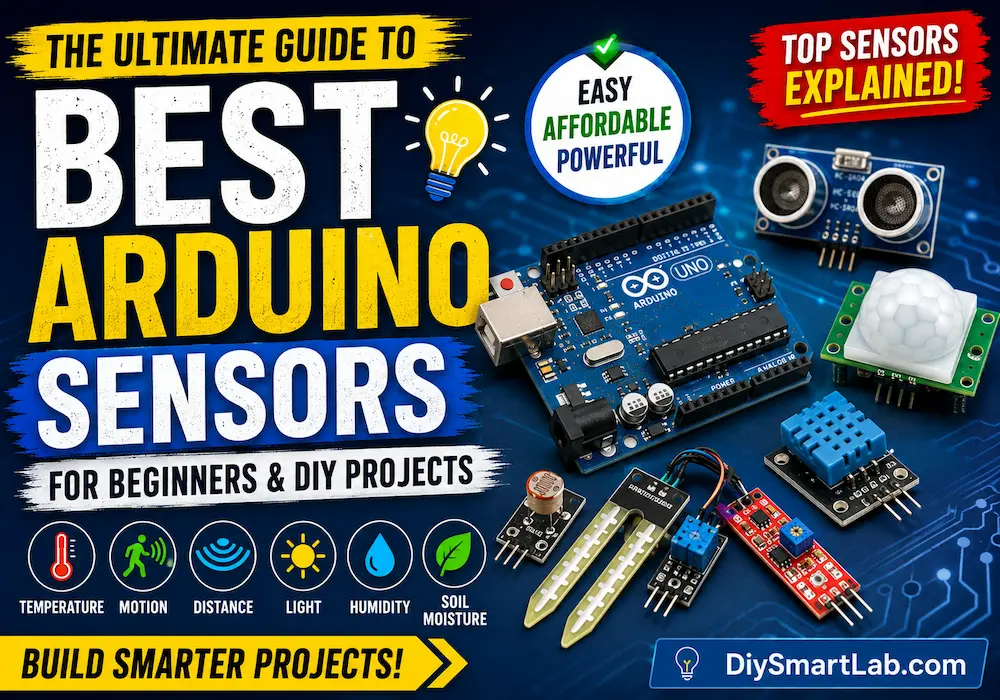
Best Arduino Sensors for Beginners and DIY Projects

Best Arduino Sensors for Beginners and DIY Projects
Arduino sensors are one of the most important parts of any electronics or IoT project. Sensors help Arduino boards detect temperature, motion, distance, light, sound, humidity, gas, and many other real-world conditions. Whether you are a beginner or an advanced maker, learning about the best Arduino sensors can help you build smart and creative DIY projects easily.
In this complete guide by DiySmartLab.com, you will learn about the best Arduino sensors, how they work, their applications, and the most popular projects you can build using them.
What Are Arduino Sensors?
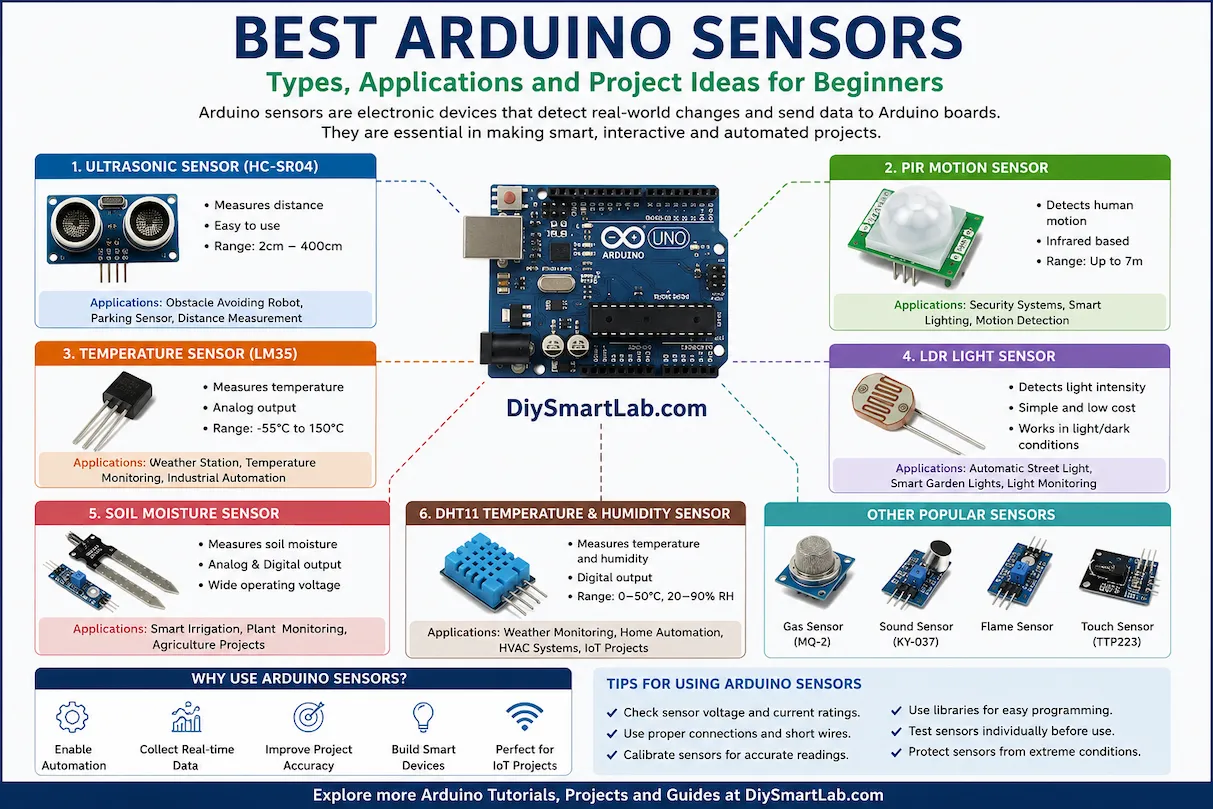
Arduino sensors are electronic modules that can detect physical changes from the environment and send signals to an Arduino board. These sensors convert real-world data into electrical signals that Arduino can understand and process.
For example:
- A temperature sensor measures heat.
- A motion sensor detects movement.
- An ultrasonic sensor measures distance.
- An LDR sensor detects light intensity.
Arduino sensors are widely used in robotics, home automation, security systems, weather stations, and IoT projects.
Why Sensors Are Important in Arduino Projects
Sensors make Arduino projects smart and interactive. Without sensors, Arduino cannot detect environmental changes or user input.
- Enable automation systems
- Collect real-world data
- Improve project accuracy
- Create smart devices
- Help in IoT communication
- Make robotics projects intelligent
Best Arduino Sensors for Beginners
Here are some of the best Arduino sensors that every beginner should learn.
1. Ultrasonic Sensor (HC-SR04)
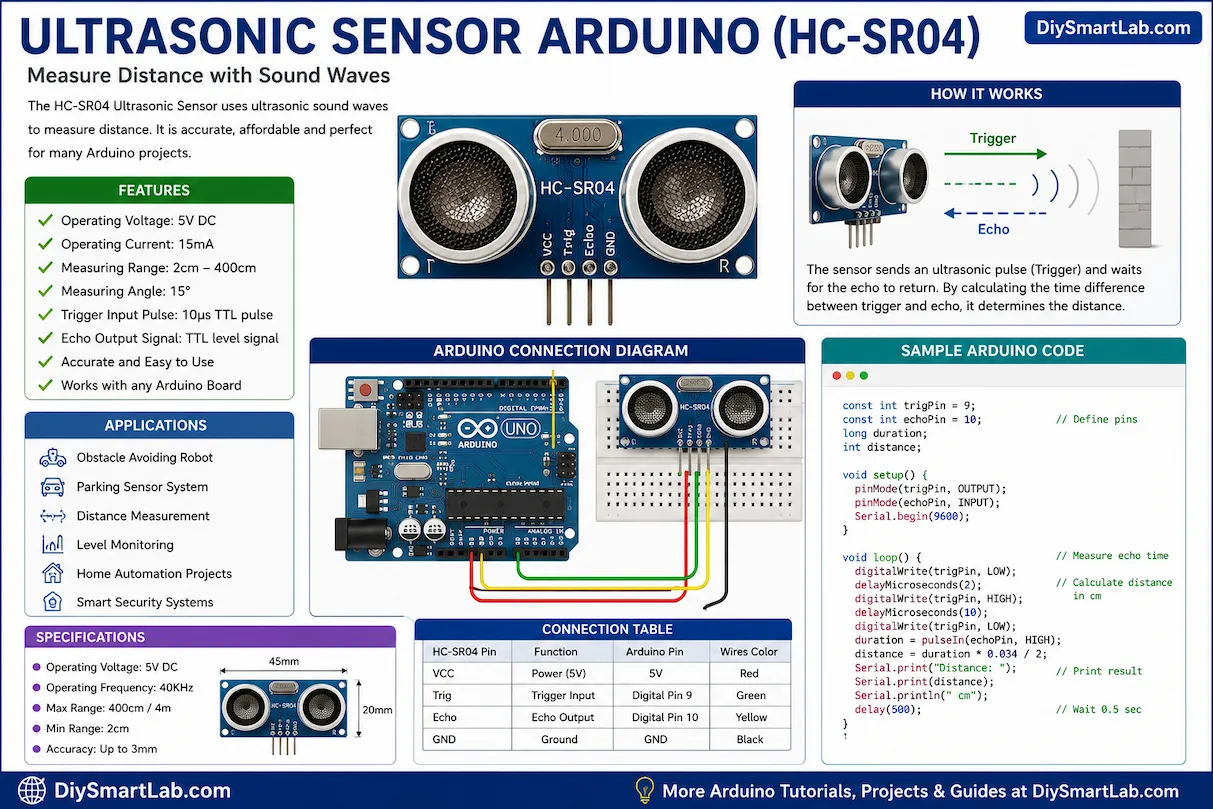
The HC-SR04 ultrasonic sensor measures distance using ultrasonic sound waves. It is one of the most popular sensors for Arduino projects.
Applications of Ultrasonic Sensor
- Obstacle avoiding robot
- Water level monitoring
- Distance measurement
- Parking sensor system
2. PIR Motion Sensor
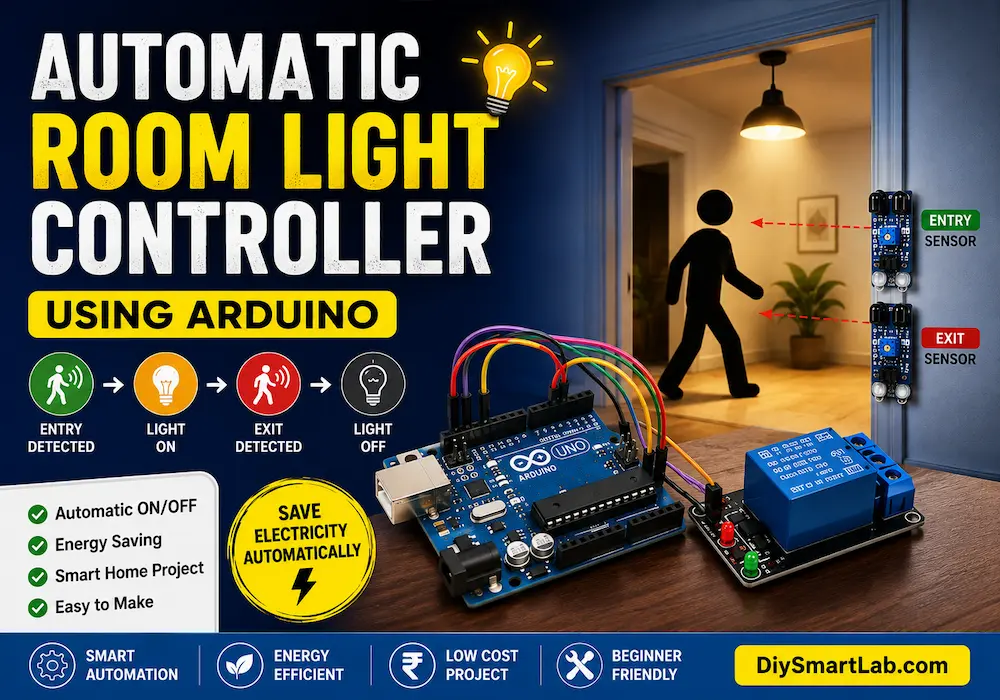
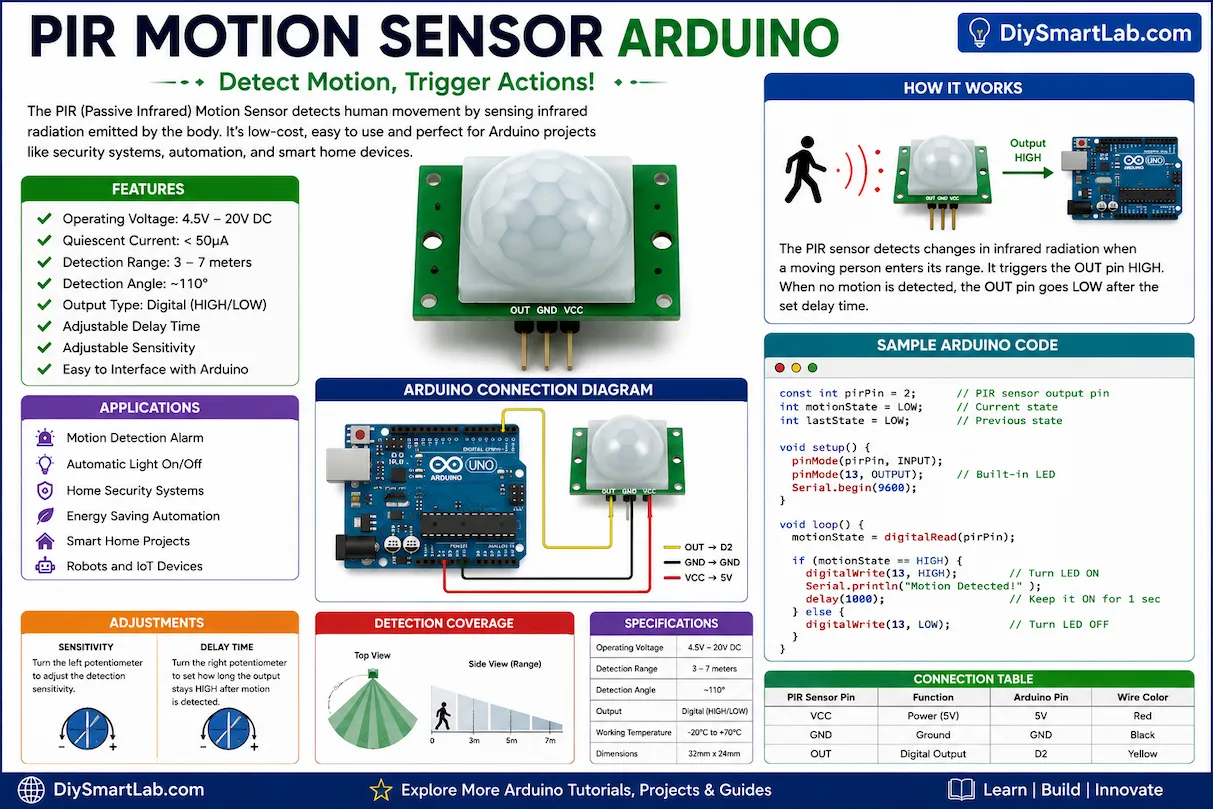
The PIR sensor detects human motion using infrared radiation. It is commonly used in automatic lighting and security systems.
Applications of PIR Sensor
- Motion detector systems
- Smart home lighting
- Security alarms
- Energy-saving systems
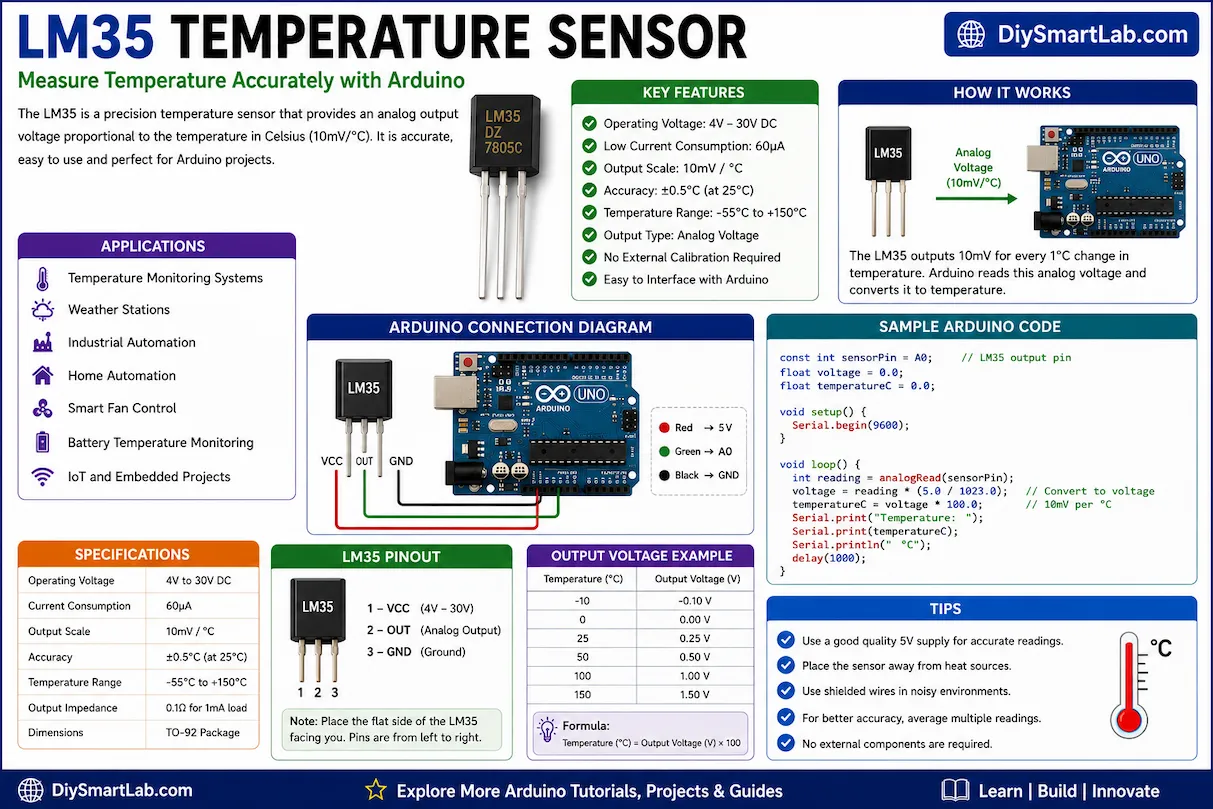
3. Temperature Sensor (LM35)
The LM35 temperature sensor measures temperature accurately and provides analog output.
Applications of Temperature Sensor
- Weather station projects
- Temperature monitoring
- Smart fan systems
- Industrial automation
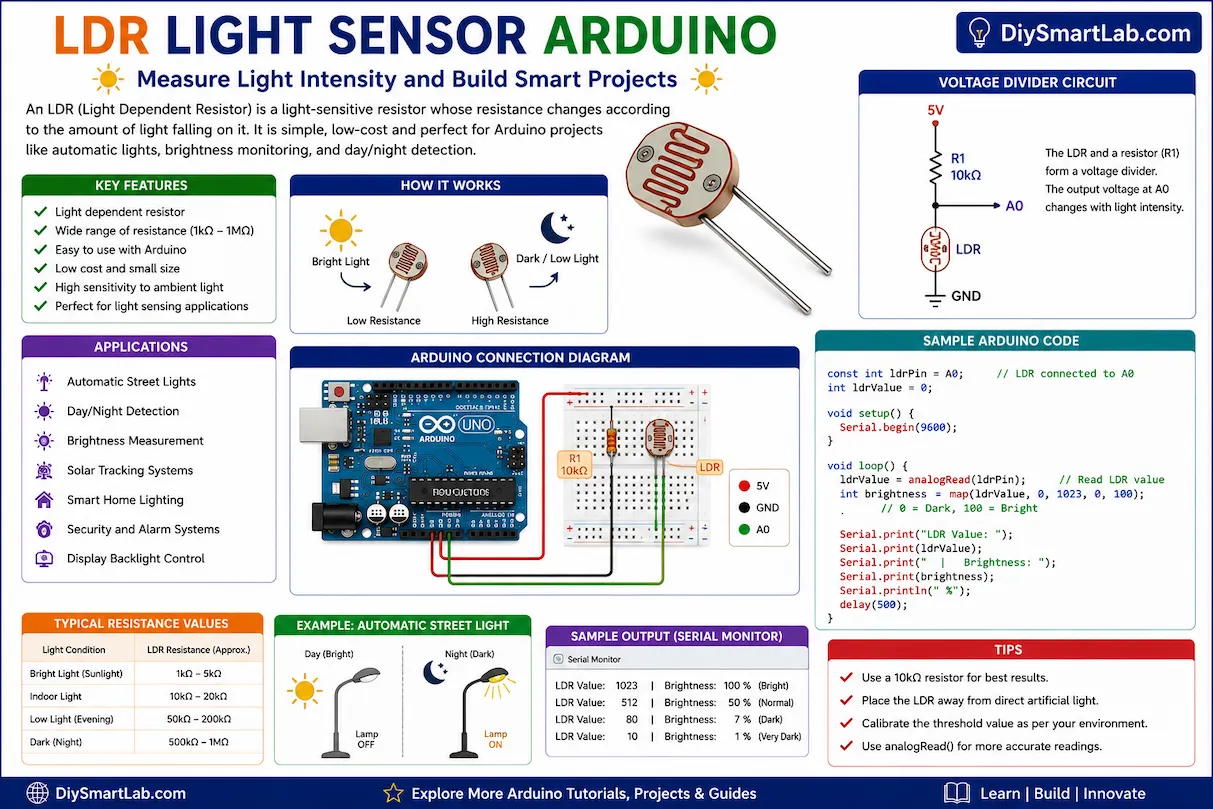
4. LDR Light Sensor
An LDR sensor changes resistance according to light intensity. It is commonly used in automatic lighting systems.
Applications of LDR Sensor
- Automatic street lights
- Smart garden lights
- Light intensity monitoring
- Solar tracking systems
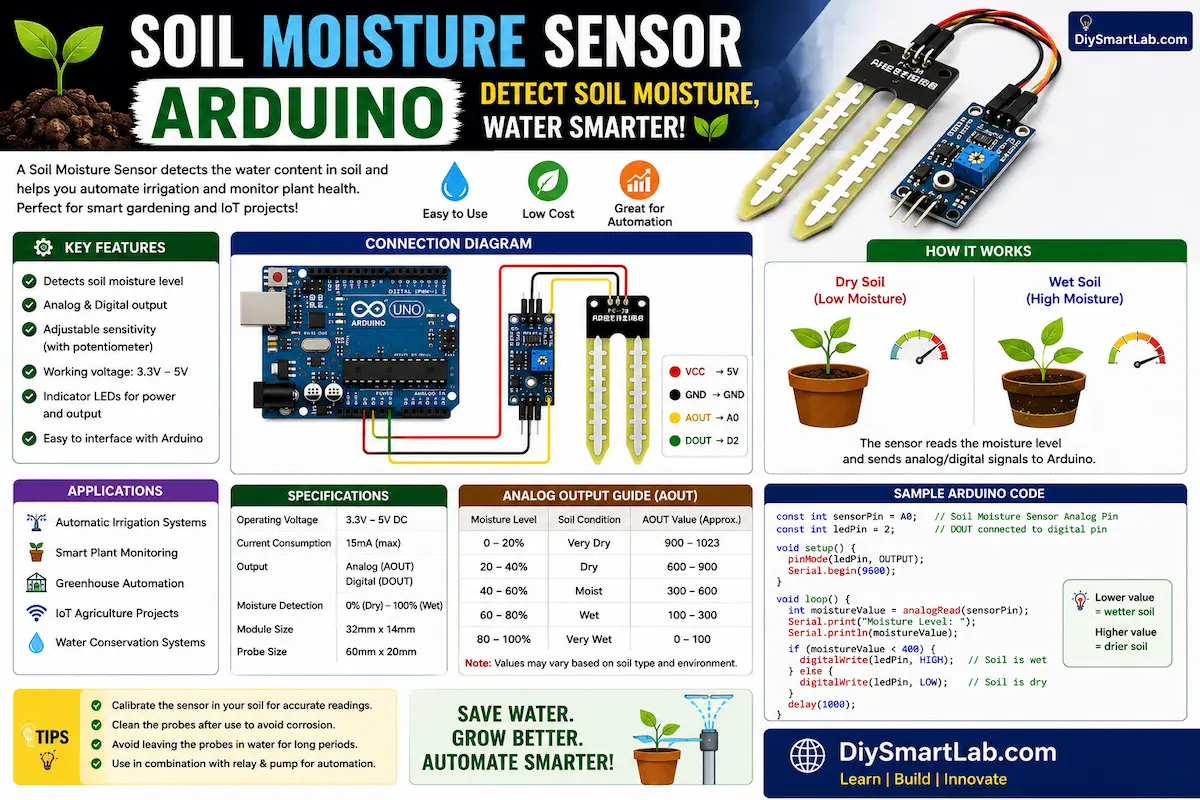
5. Soil Moisture Sensor
The soil moisture sensor measures water levels in soil. It is widely used in smart irrigation projects.
Applications of Soil Moisture Sensor
- Automatic irrigation system
- Smart farming projects
- Plant monitoring systems
- IoT agriculture systems
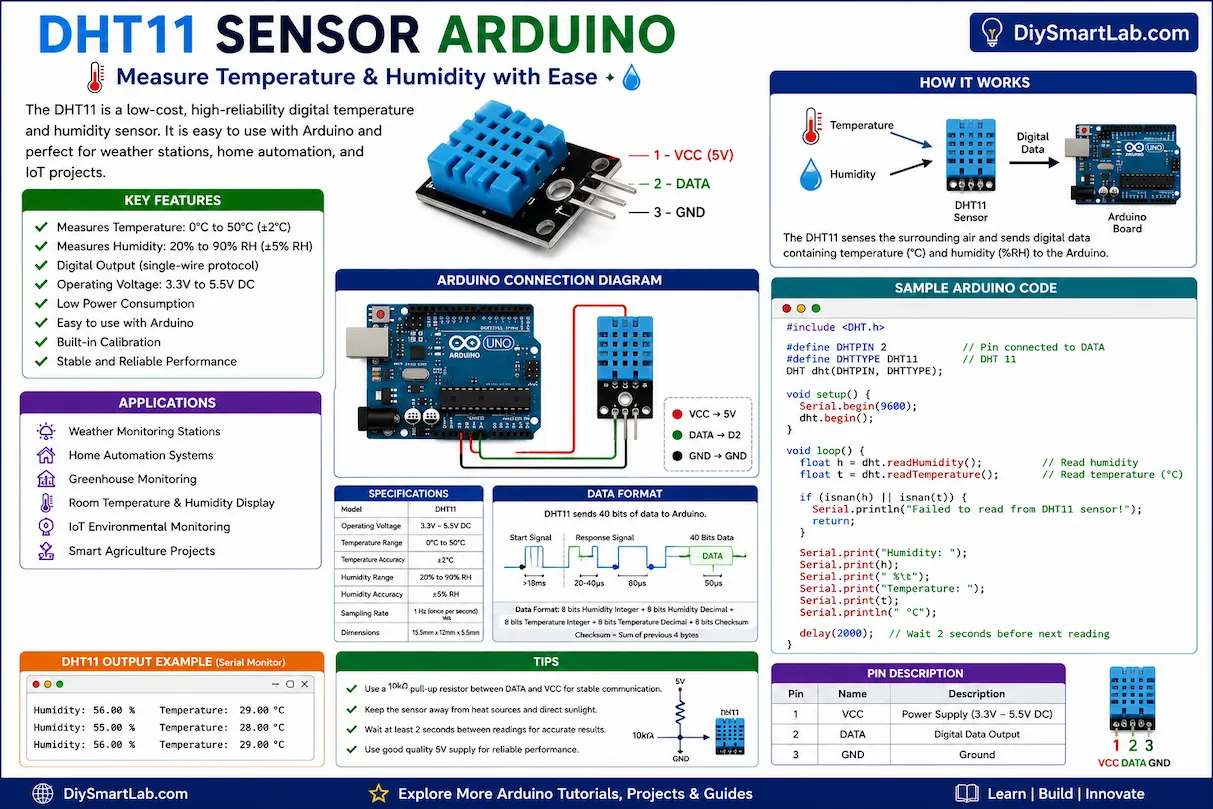
6. DHT11 Humidity and Temperature Sensor
The DHT11 sensor measures both temperature and humidity. It is beginner-friendly and easy to use with Arduino.
Applications of DHT11 Sensor
- Weather monitoring systems
- Home automation
- Temperature display projects
- IoT climate systems
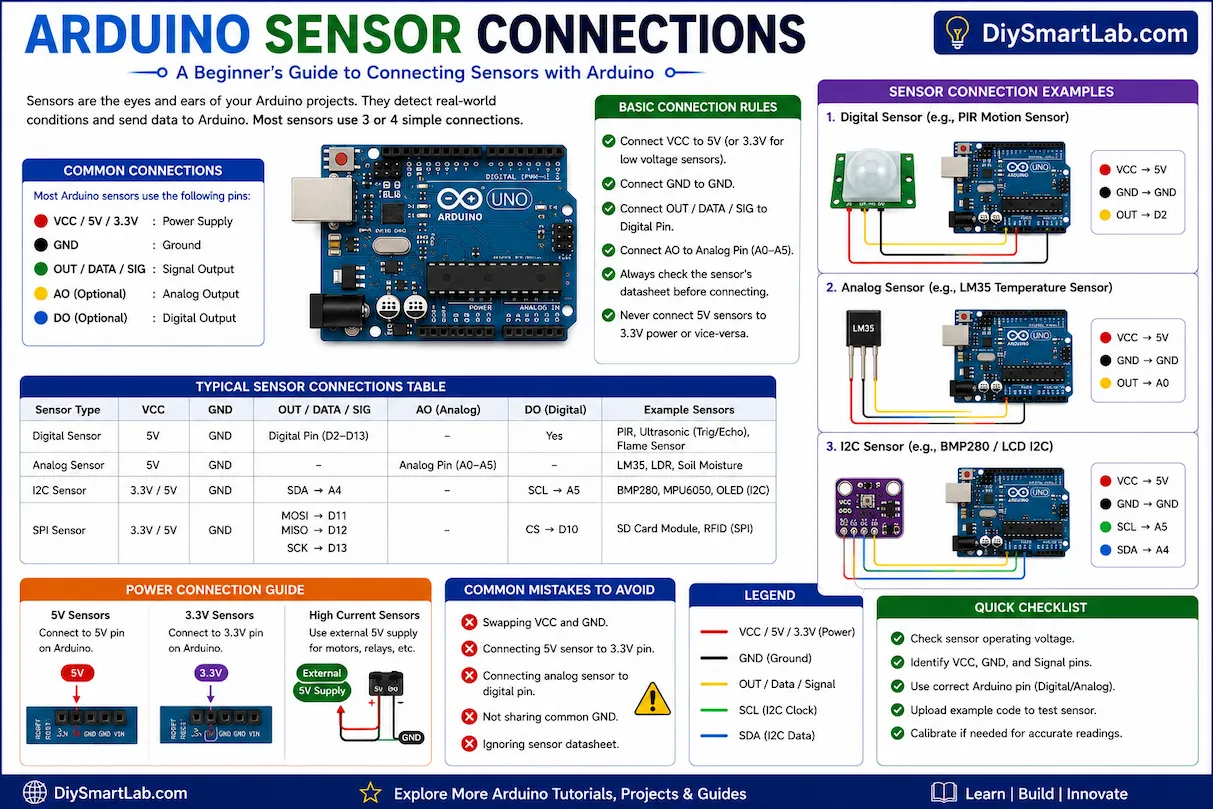
Arduino Sensor Connection Basics
Most Arduino sensors use three basic connections:
- VCC (Power)
- GND (Ground)
- Signal Pin
The signal pin connects to Arduino analog or digital pins depending on the sensor type.
Popular Arduino Sensor Projects
- Smart Home Automation
- Automatic Street Light
- Obstacle Avoiding Robot
- Weather Monitoring Station
- Smart Irrigation System
- Motion Detection Alarm
- IoT Sensor Dashboard
- Smart Parking System
Tips for Using Arduino Sensors
- Always check sensor voltage ratings.
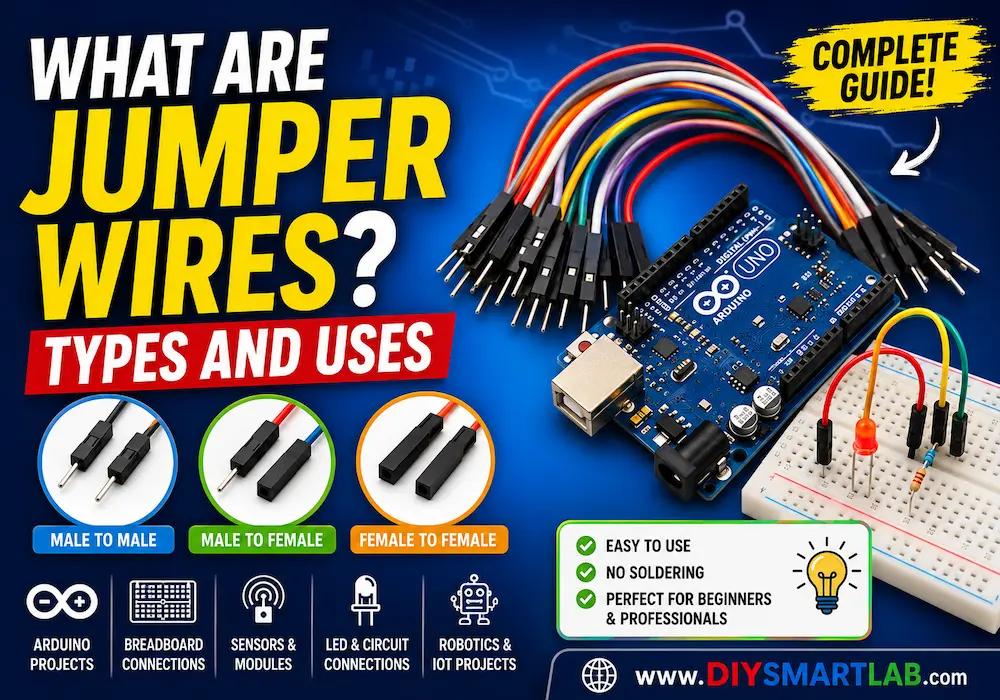
- Use proper jumper wire connections.
- Calibrate sensors for accurate readings.
- Keep wires short to reduce noise.
- Use libraries for easier programming.
- Test sensors individually before combining them.
Advantages of Arduino Sensors
- Easy to use
- Affordable for beginners
- Large online community support
- Compatible with IoT systems
- Perfect for DIY electronics projects
- Wide range of sensor modules available
Conclusion
Arduino sensors are essential for building smart electronics and IoT projects. Whether you want to measure temperature, detect motion, monitor light, or automate your home, sensors make your Arduino projects more powerful and interactive.
Beginners should start with simple sensors like the ultrasonic sensor, PIR sensor, DHT11, and LDR sensor. These modules are easy to connect and perfect for learning Arduino programming and electronics basics.
At DiySmartLab.com, we regularly publish beginner-friendly Arduino tutorials, electronics guides, and smart DIY projects to help you learn electronics step by step.
Frequently Asked Questions (FAQs)
Which sensor is best for Arduino beginners?
The ultrasonic sensor, PIR sensor, and DHT11 sensor are great choices for beginners because they are easy to use and widely available.
Can Arduino use multiple sensors together?
Yes, Arduino can use multiple sensors at the same time in a single project.
Which Arduino sensor is used for motion detection?
The PIR motion sensor is commonly used for detecting human movement.
What is the most popular Arduino sensor?
The HC-SR04 ultrasonic sensor is one of the most popular Arduino sensors for DIY electronics projects.
Can Arduino sensors work with ESP32?
Yes, most Arduino sensors are also compatible with ESP32 development boards.
You May Also Like
- Smart Irrigation System Using Arduino and Soil Moisture Sensor
- What is a Temperature Sensor (LM35)? Explained
- What is an LDR (Light Sensor)? Working & Uses
- What is an Ultrasonic Sensor? Distance Measurement Guide
- Best Arduino Sensors for Beginners and DIY Projects
- Automatic Room Light Controller Using Arduino